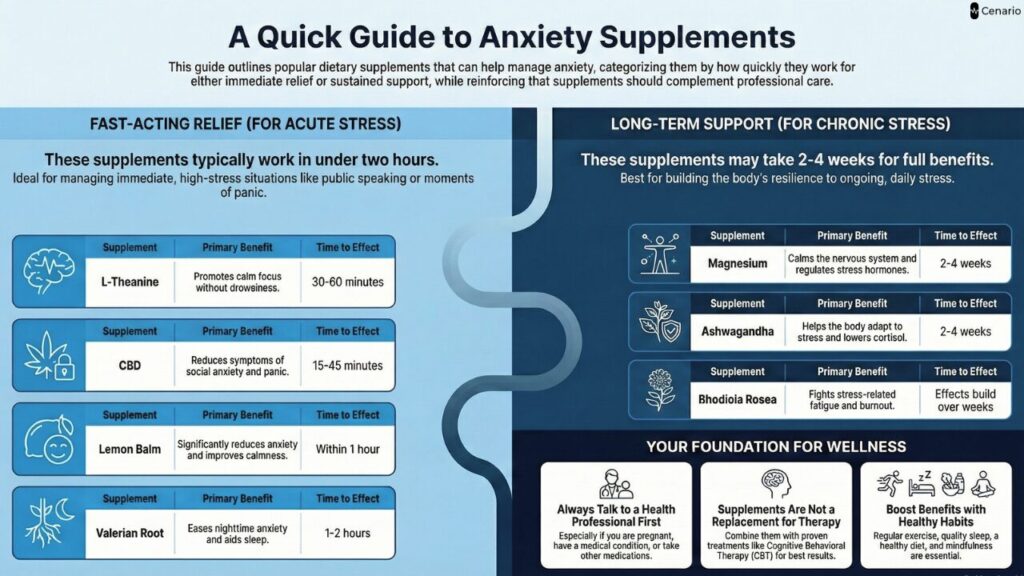

Anxiety is more than just feeling nervous, it’s a real condition that affects your mental clarity, focus, sleep, and overall health. Millions of people deal with stress and anxiety every day, and while therapy and healthy habits are the foundation of good mental health, dietary supplements can often play a supportive role.
In this blog post, we’ll explore the best supplements for anxiety that are known to reduce anxiety symptoms, some of which work fast, and others that are more effective long term. We’ll cover how these supplements work, what studies suggest, possible side effects, and when to talk to a health professional.
Fast-acting anxiety relief depends on targeting the nervous system rather than masking symptoms. This article is part of our wider approach to understanding anxiety physiology, calming strategies, and nutritional support, covered in our Anxiety knowledge and relief framework.
What Is Anxiety and Why Does It Happen?
Anxiety is your body’s natural response to stress. It becomes a problem when it’s constant, overwhelming, or interfering with your daily life. This can lead to what’s known as an anxiety disorder, which may require professional support like cognitive behavioral therapy (CBT), medication, or a combination of treatments.
Symptoms ofs anxiety include:
- Racing heart
- Trouble concentrating
- Restlessness or irritability
- Muscle tension
- Poor sleep quality
If you’re experiencing these symptoms frequently, it’s important to speak with a health professional to discuss proper treatments for anxiety.
1. Magnesium
How It Helps:
Magnesium plays a critical role in nerve signaling and calming the nervous system. It helps regulate the body’s production of stress hormones like cortisol, which are often elevated in people experiencing anxiety and stress. Low magnesium levels are commonly linked to poor mood, tension, and restlessness.
What Research Suggests:
Studies suggest magnesium supplementation can significantly reduce anxiety symptoms, particularly in people who are deficient—such as those with poor diets or high stress levels.
How Fast It Works:
Some users report feeling calmer within a few days, while others may take 2–4 weeks to experience full benefits.
Dosage & Forms:
- Recommended dose: 200–400 mg daily
- Best form: Magnesium glycinate (absorbs well and has calming properties)
- Magnesium citrate is also effective but may cause loose stools
Side Effects:
- Upset stomach
- Diarrhea (especially in high doses)
- Low blood pressure or drowsiness in excessive amounts
Long term use is generally safe if taken within recommended limits, but always check with a health professional before starting.
2. L-Theanine
How It Helps:
L-Theanine is a naturally occurring amino acid found in green tea. It increases levels of calming brain chemicals like GABA, dopamine, and serotonin, helping the brain stay relaxed yet alert.
Clinical Trials:
Multiple clinical trials show that L-Theanine reduces stress and anxiety, improves attention, and enhances mental clarity, especially under pressure.
Fast Relief:
Begins working within 30 to 60 minutes. Ideal for short term relief in high-stress moments such as exams, interviews, or public speaking.
Dosage:
100–200 mg per use; safe to take daily
Side Effects:
- Mild dizziness or nausea (rare)
- Headaches in high doses
- Not known to cause dependency
Well-tolerated for long term use and often stacked with caffeine to reduce jitters.
3. Ashwagandha
How It Helps:
Ashwagandha is an adaptogen, meaning it helps the body adapt to physical and emotional stress. It lowers cortisol levels and supports the adrenal system, which becomes overactive during periods of chronic stress.
Studies Suggest:
A number of studies suggest ashwagandha can significantly reduce anxiety symptoms, improve sleep quality, and help balance mood—both in short term situations and with long term use.
Timeline:
Some users report improvements within a few days, but it typically takes 2–4 weeks for full effects.
Dosage:
- 300–600 mg per day of a standardized extract (withanolides 5%+)
- Take in the morning or before bed, depending on how your body responds
Side Effects:
- Drowsiness or fatigue
- Nausea or digestive upset
- In high doses, may alter thyroid hormone levels
Speak with a health professional if you have thyroid disorders or are pregnant.
4. Valerian Root
How It Helps:
Valerian root is commonly used to treat insomnia, but it’s also helpful for reducing anxiety symptoms. It boosts GABA levels in the brain—promoting a sense of calm and reducing overthinking or panic.
Research Suggests:
Evidence shows valerian improves sleep quality and lowers tension when taken before bed. It’s especially helpful in short term use for nighttime anxiety or restlessness.
How Fast It Works:
Begins working in 1–2 hours. Ideal for use before sleep or during high-anxiety situations.
Dosage:
400–900 mg before bed
Side Effects:
- Drowsiness
- Vivid dreams or nightmares
- Potential drug interactions, especially with sedatives or antidepressants
Not recommended for long term daily use without medical supervision. May cause withdrawal-like symptoms if stopped suddenly after extended use.
5. Lemon Balm
How It Helps:
Lemon balm is a fragrant herb in the mint family, known for its calming and mood-enhancing effects. It works by increasing GABA activity in the brain and has mild sedative properties.
Clinical Trials:
In one study, lemon balm significantly reduced symptoms of anxiety and improved calmness within one hour of a single dose.
Dosage:
- 250–500 mg capsules
- Also available as tea or tincture
Side Effects:
- Mild dizziness
- Nausea in high doses
- May cause excessive drowsiness if combined with other calming herbs or medications
Safe for short term use and occasional stress. For long term use, consult a health professional.
6. CBD (Cannabidiol)
How It Helps:
CBD is a compound from the cannabis plant that doesn’t produce a high. It affects the endocannabinoid system, which plays a role in regulating mood, sleep, and stress.
What Studies Suggest:
Clinical trials show CBD may reduce symptoms of social anxiety, panic disorder, and general anxiety disorder.
How Fast It Works:
Effects are typically felt in 15 to 45 minutes, making it ideal for short term use in stressful moments.
Dosage:
Start with 10–25 mg and increase gradually
Side Effects:
- Dry mouth
- Drowsiness
- Upset stomach
- Report of liver toxicity in very high doses or long term use, especially in combination with medications like anti-epileptics
Always choose third-party tested CBD and consult your doctor before starting especially if you’re on medication.
7. Rhodiola Rosea
How It Helps:
Rhodiola is another powerful adaptogen that enhances your body’s resistance to stress. It improves energy, focus, and emotional stability, making it ideal for those who experience both fatigue and anxiety.
Research Suggests:
Effective in improving symptoms of burnout, poor concentration, and emotional exhaustion.
Dosage:
200–400 mg per day, preferably in the morning
Side Effects:
- Irritability or restlessness in high doses
- Insomnia if taken too late in the day
Safe for short term performance boosts; less studied for long term use.
8. GABA (Gamma-Aminobutyric Acid)
How It Helps:
GABA is the brain’s main calming neurotransmitter. Supplementing with GABA may reduce excitability in the brain, helping to manage symptoms of anxiety disorder, restlessness, and overthinking.
Clinical Insight:
Though some debate exists over whether oral GABA crosses the blood-brain barrier, many users report feeling calmer and more focused after taking GABA supplements.
Dosage:
100–250 mg as needed
Side Effects:
- Drowsiness
- Headache
- May interact with alcohol or sedatives
Use cautiously alongside other GABA-boosting drugs or supplements.
What to Consider Before Trying Supplements
Before starting any supplement, remember:
- Talk to a health professional – especially if you’re taking medication or have a diagnosed mental health condition.
- Read labels carefully – look for third-party tested products and avoid brands that use fillers or artificial ingredients.
- Start low and go slow – to monitor for possible side effects.
- Supplements are not a replacement for therapy or medical treatment especially for severe anxiety disorder.
- Combine supplements with proven treatments like cognitive behavioral therapy for best results.
Side Effects and Safety Warnings
All supplements can have side effects, especially in high doses or with long term use. Here are a few risks to watch for:
- Liver health: There have been occasional reports of liver damage with long-term use of certain herbal supplements.
- Drug interactions: Supplements can interact with anxiety medications, antidepressants, and sleep aids.
- Over-sedation: Using multiple calming supplements together may cause excessive drowsiness.
Always check with your health professional before combining supplements or using them with prescription medications.
Lifestyle Changes to Boost the Benefits of Supplements
Even the best supplement won’t be as effective if it’s not part of a larger plan to support your mental health. Supplements are meant to complement, not replace, healthy lifestyle choices and therapeutic practices.
Here are some proven lifestyle changes that can boost the effects of anxiety supplements and help you feel more calm, focused, and balanced.
1. Practice Meditation and Mindfulness
Regular meditation helps train your brain to stay calm in the face of stress. Even 5–10 minutes a day can significantly lower stress hormones like cortisol and reduce symptoms of anxiety.
Try guided apps like Headspace or Calm, or simply sit quietly and focus on your breath.
2. Exercise Regularly
Physical activity boosts endorphins and serotonin, which naturally improve mood. It also reduces muscle tension and improves sleep quality—both of which can be negatively affected by anxiety.
Aim for at least 30 minutes of movement, 3–5 days a week. Walking, yoga, swimming, or strength training all help.
3. Improve Sleep Quality
Poor sleep and anxiety go hand-in-hand. Improving your sleep hygiene can dramatically lower anxiety and stress levels during the day.
Stick to a consistent sleep schedule, avoid screens before bed, and create a calming nighttime routine.
4. Eat a Brain-Healthy Diet
What you eat impacts how you feel. A diet rich in omega-3 fatty acids, fiber, B-vitamins, and antioxidants can support neurotransmitter function and reduce inflammation in the brain.
Focus on whole foods like fatty fish, leafy greens, nuts, berries, and whole grains.
5. Try Cognitive Behavioral Therapy (CBT)
CBT is a research-backed form of talk therapy that teaches you to recognize and change negative thought patterns. It’s considered the gold standard treatment for many forms of anxiety disorder and works even better when combined with the right supplements.
Look for licensed therapists who specialize in anxiety and offer CBT sessions—either in person or online.
6. Limit Screen Time and Digital Overload
Too much time on social media or news apps can increase mental fatigue, comparison anxiety, and overstimulation. Set healthy boundaries with your devices.
Use “focus” or “do not disturb” modes during the day, and unplug at least 1 hour before bed.
Final Thoughts: Choosing the Right Supplement for You
If you’re looking to manage stress and anxiety naturally, these dietary supplements may provide quick and effective relief. Whether you’re dealing with everyday stress, performance anxiety, or symptoms of a more serious anxiety disorder, choosing the right supplement—and using it responsibly can make a meaningful difference.
But remember: supplements are only part of the puzzle. The best results come from combining them with therapy, self-care routines, and guidance from a health professional.
Not Sure Where to Start?
At Cenario, we understand that every mind is different, and so is every solution.
Take our quick quiz to discover the supplement blend that fits your unique stress type, lifestyle, and wellness goals.
Whether you need help with calming down, sleeping better, or staying focused under pressure, we’ll guide you to a natural solution that works for you.
Your calm starts here. Take the quiz now
Frequently Asked Questions
What is the best supplement for anxiety that works fast?
For quick relief, L-Theanine, CBD, and Lemon Balm are among the top choices. These supplements may start working within 30–60 minutes and are ideal for short-term anxiety like public speaking or high-stress moments. However, response time varies by individual.
Can I take anxiety supplements with my medication?
Some supplements can interact with anxiety medications, antidepressants, or other prescriptions. Always speak with your health professional before starting a new supplement, especially if you’re on SSRIs, benzodiazepines, or sleep aids.
Are there any side effects to using anxiety supplements long term?
Yes, while many supplements are safe, long-term use, especially in high doses may cause side effects like drowsiness, digestive issues, hormone imbalances, or even liver stress in rare cases. Regular check-ins with your doctor are recommended.
How long do anxiety supplements take to work?
It depends on the supplement. Fast-acting options like L-Theanine, CBD, and Lemon Balm can work within an hour. Others like Ashwagandha or Rhodiola may take 2–4 weeks to build up and provide full benefits.
Can supplements replace therapy or medication for anxiety?
No. supplements are not a replacement for professional treatment. They can support your mental health but should be part of a larger plan that includes therapy (like CBT), healthy lifestyle changes, and medical guidance, especially for anxiety disorders.
.