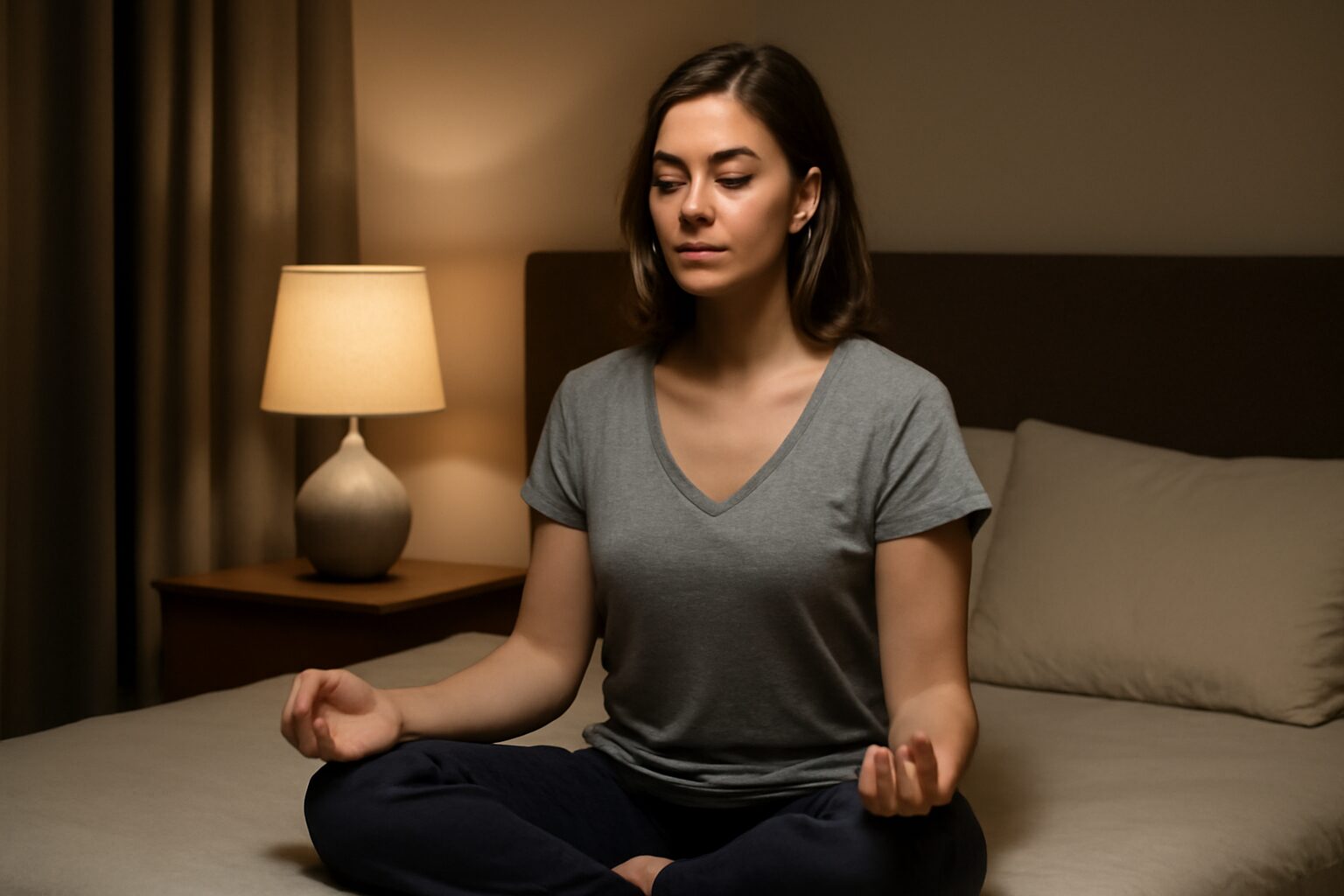

Anxiety, Sleep, and Modern Life
In today’s busy world, many people struggle with anxiety and poor sleep. Long work hours, constant phone use, and daily stress make it hard to relax. Anxiety often causes restless nights, and lack of sleep makes stress even worse.
This creates a cycle that affects mood, health, and productivity. Finding simple and effective solutions is more important than ever.
How Meditation Can Help
Meditation is a natural way to calm the mind and improve both anxiety and sleep. By focusing on mindfulness and relaxation, meditation helps reduce stress, lower anxiety, and improve sleep quality. Unlike medications, it’s safe, non-invasive, and can be practiced anywhere. Over time, meditation can bring more peace, balance, and better overall well-being.
What to Expect
This blog explains how meditation can reduce anxiety and improve sleep. You’ll learn the science behind it, simple techniques to try, and answers to common questions. Meditation is not the same for everyone, so the key is finding a style that works best for you.
Mindfulness Meditation
The main type of meditation for anxiety and sleep is mindfulness meditation. It means focusing on the present moment without judgment. This helps quiet racing thoughts, reduce stress, and improve mood, which makes it easier to sleep.
How It Works
Meditation works in two ways:
- In the body: It lowers stress hormones like cortisol, which helps you relax.
- In the mind: It trains you to step back from negative thoughts and find calm.
Together, these effects create the relaxation response, helping you feel less anxious and sleep better.
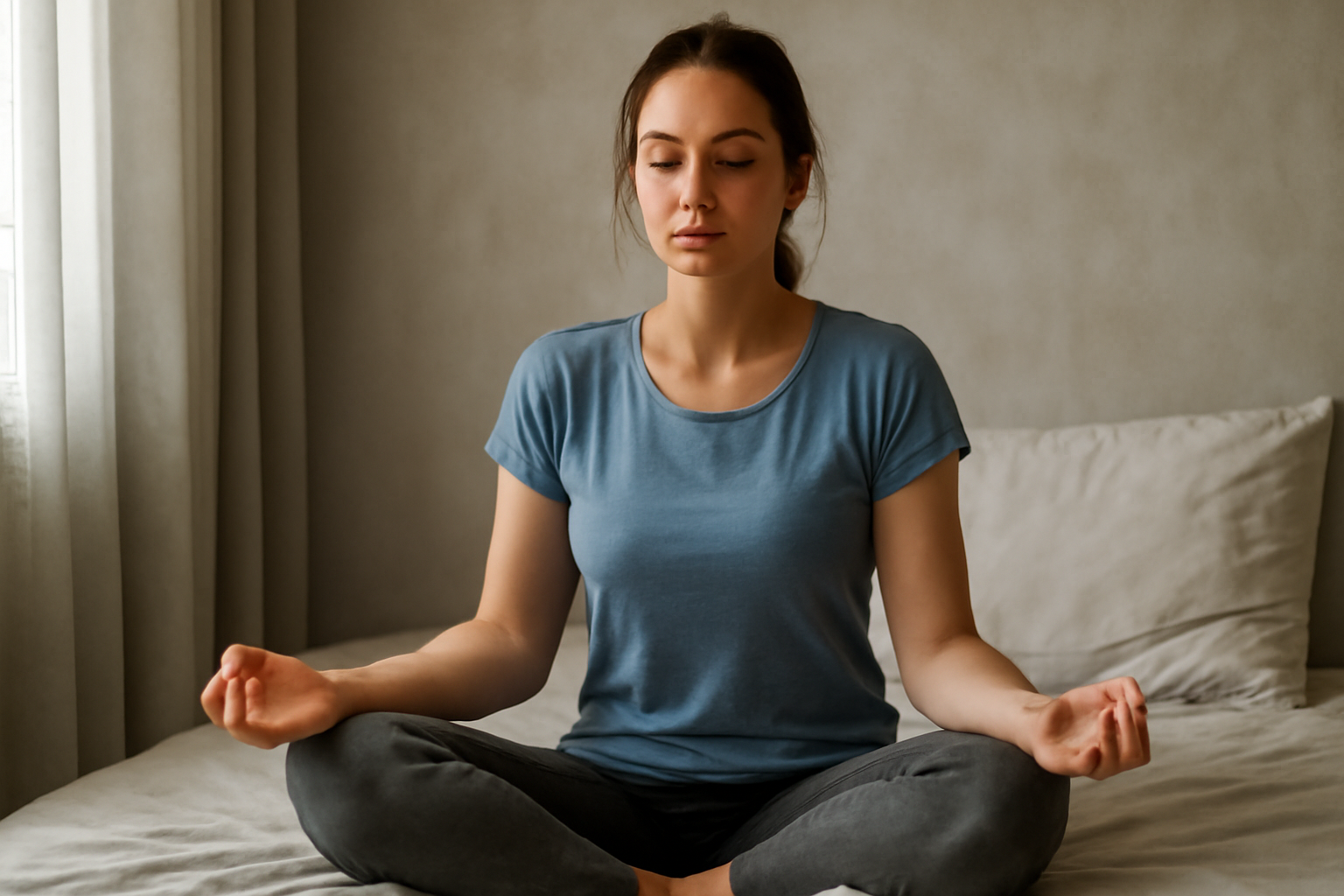
Scientific evidence and comparisons
Many studies show that meditation can be very effective for reducing anxiety and improving sleep. In fact, research suggests that meditation can work as well as cognitive-behavioral therapy (CBT) and exercise for improving sleep quality.
The interesting part is that meditation does not depend only on how long you practice but on how you practice. Quality matters more than hours. Short, focused sessions done with attention are often more effective than long, distracted ones. This shows why it’s important to meditate mindfully and consistently to get the best results.
Practical techniques for meditation
Guided mindfulness meditations
For beginners, guided sessions are the easiest way to start. These meditations use a narrator or audio guide to walk you through the process step by step.
They help you stay focused and relaxed. Start with short daily sessions of 5–10 minutes and slowly increase the time as you get more comfortable. This makes it easier to build a lasting meditation habit and see long-term improvements in anxiety and sleep.
Breathing exercises and body scans
Deep breathing and body scans are simple techniques that prepare your body and mind for relaxation. Slow, deep breathing activates your body’s calming system, lowering stress and heart rate. A body scan involves paying attention to each part of your body, noticing tension, and releasing it. These techniques are especially effective at night, helping your body shift into a restful state before bed.
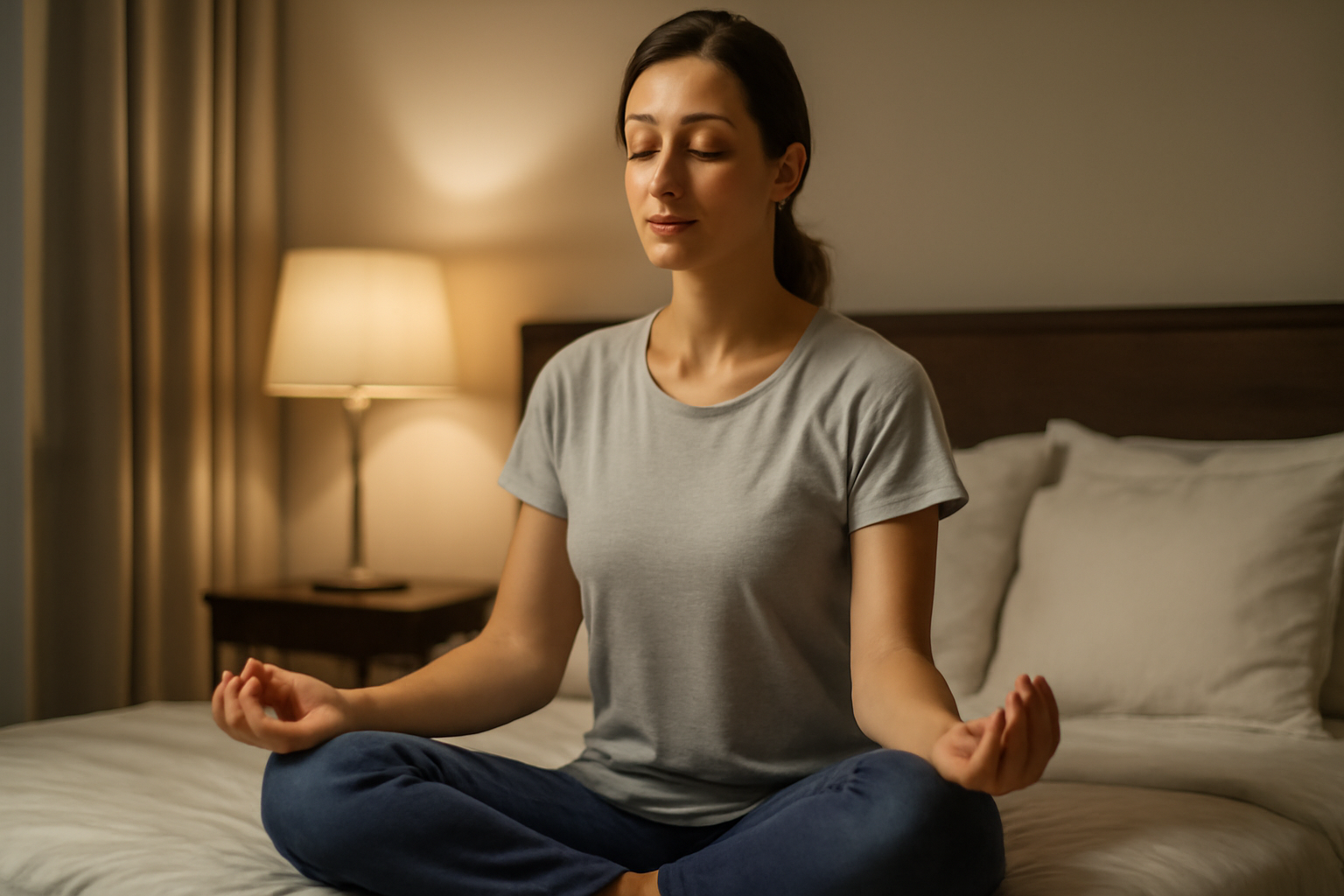
Incorporating meditation into daily life
The best results come when meditation becomes part of your routine. Find a quiet space, reduce distractions, and set a regular time each day to practice. Some people meditate in the morning to start the day calm, while others prefer evenings to unwind before sleep. Combining meditation with good sleep habits—like going to bed at the same time each night and creating a relaxing bedtime routine—can make the effects even stronger.
Meditation is personal, so experiment with different techniques until you find what works best for you. Guided sessions, breathing exercises, and body scans are just a few of the options that can help you feel calmer, sleep better, and live with more balance.
Broader benefits of meditation
The benefits of meditation go far beyond reducing anxiety and improving sleep. Many people experience more life satisfaction, less depression, and a stronger sense of resilience. Meditation helps you develop a positive outlook, makes you more mindful in daily life, and can even improve your relationships by encouraging patience and empathy.
It also works well alongside other treatments. For example, if you’re already using therapy or medication, meditation can enhance those benefits rather than replace them. This makes it a valuable addition to a full wellness plan, offering a well-rounded path to better mental and physical health.
Frequently Asked Questions
How long does it take to see results from meditation?
Most people notice changes within a few weeks of daily practice. You may feel calmer, less anxious, and start sleeping better after just a short period of consistency.
Do I need to meditate for hours to get benefits?
No. Short sessions of 10–15 minutes are enough if you practice with focus. The quality of your practice is what really matters.
Can meditation replace medication or therapy?
No. Meditation should be seen as a complement, not a replacement. It can support and strengthen other treatments, but always consult your doctor before making changes to your care plan.
What if I can’t clear my mind during meditation?
It’s normal for thoughts to pop up. The goal isn’t to block them but to notice them calmly and return your focus to your breath or guide. With practice, this becomes easier and helps reduce anxiety.
When is the best time to meditate?
Anytime works, but mornings and evenings are most common. Morning sessions set a calm tone for the day, while evening sessions prepare your mind and body for better sleep.