
Is Insomnia a Symptom of Pregnancy?
Many women experience sleep problems during early pregnancy, even before they realize they are pregnant. You may feel extremely tired during the day but still struggle to fall asleep at night or stay asleep. This condition, known as insomnia during pregnancy, is very common and can be frustrating and exhausting.
Sleep changes in early pregnancy are normal, but ongoing troubled sleep can affect your mood, energy, and overall health. Understanding why sleep problems happen—and learning safe ways to improve sleep during pregnancy can help you feel more rested and supported during this important time.
Is Insomnia a Symptom of Pregnancy?
Yes, insomnia can be an early symptom of pregnancy. Hormonal changes begin soon after conception and can affect how the brain controls sleep. Many pregnant women notice changes in their sleep before other common pregnancy symptoms such as nausea or breast tenderness appear.
You may feel:
- More alert at night
- Unable to relax before bed
- Waking up often during the night
These sleep changes are normal in early pregnancy, but they still deserve attention.
Why Sleep Problems Happen in Early Pregnancy
Hormonal Changes
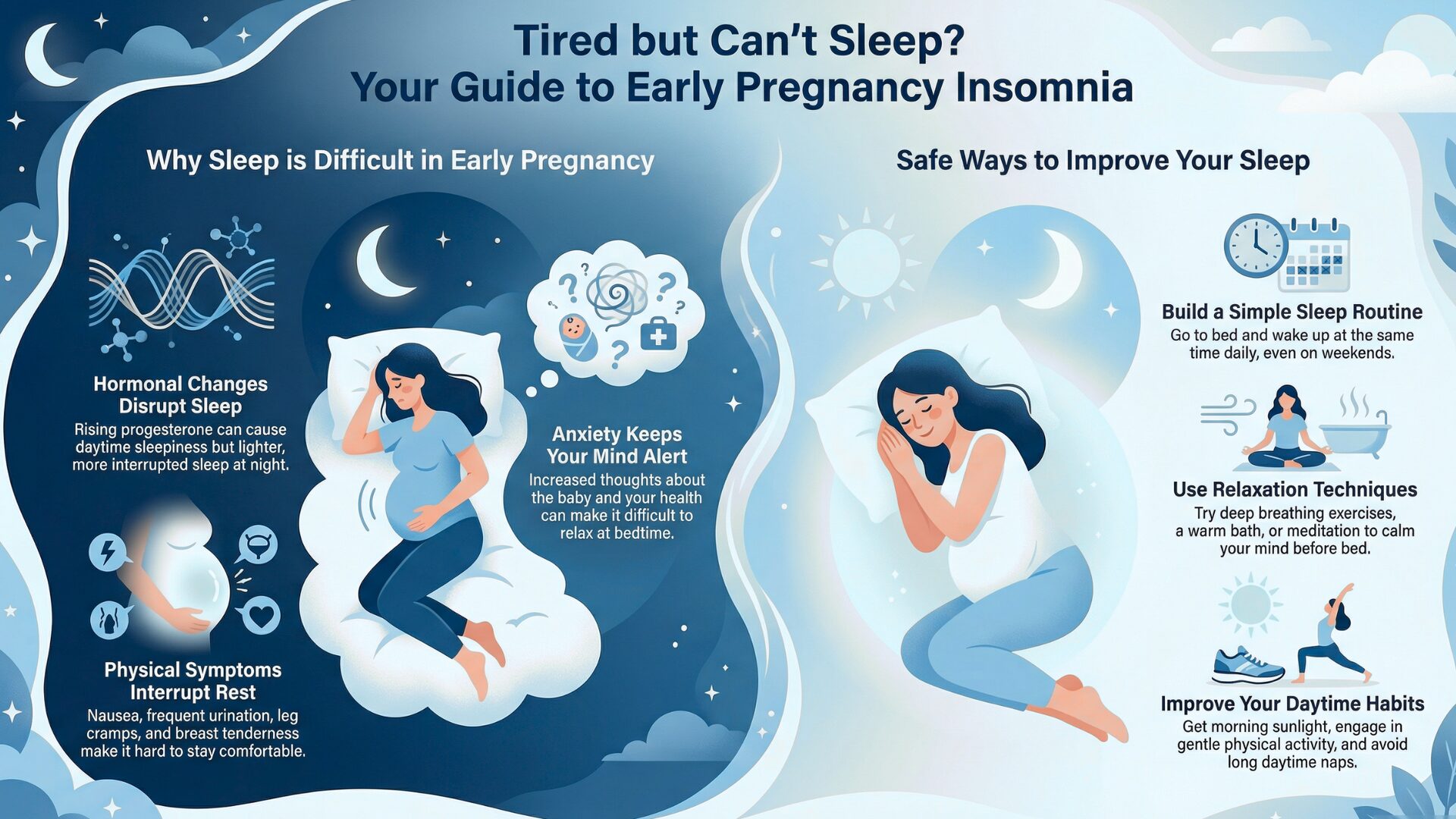
During early pregnancy, progesterone levels increase. Progesterone can make you sleepy during the day, but it can also cause lighter sleep at night. This makes it harder to get quality sleep and easier to wake up during the night.
Estrogen levels also change and can affect your body clock, which controls when you feel sleepy and awake.
Physical Pregnancy Symptoms
Several physical pregnancy symptoms can interrupt sleep, including:
- Nausea or heartburn at night
- Frequent urination
- Breast tenderness
- Leg cramps or muscle tightness
These discomforts often cause sleep problems and make it difficult to stay comfortable in bed.
Anxiety and Mental Activity
Early pregnancy often brings emotional changes. You may think more about your health, the baby, or future responsibilities. This mental activity can keep your brain alert, making it harder to relax and fall asleep at night.
Sleep Disorders During Pregnancy
Pregnancy can make existing sleep disorders worse or bring new ones to light. One example is obstructive sleep apnea, a condition where breathing briefly stops during sleep. Signs include loud snoring, gasping for air, or feeling very tired during the day.
If you notice these symptoms, it is important to talk to a healthcare provider.

How Sleep Deprivation Affects Pregnant Women
Short-term insomnia is usually not harmful. However, long-lasting sleep deprivation can lead to:
- Increased stress
- Difficulty concentrating
- Mood swings
- Weakened immune system
Poor sleep during pregnancy has also been linked to a higher risk of postpartum depression, which makes healthy sleep habits especially important.
Safe Ways to Improve Sleep in Early Pregnancy
1. Build a Simple Sleep Routine
A regular bedtime routine helps your body know when it is time to sleep.
Try to:
- Go to bed and wake up at the same time every day
- Dim lights in the evening
- Avoid screens before bedtime
- Do calming activities like reading or stretching
Consistency helps improve sleep during pregnancy.
2. Use Relaxation Techniques
Safe relaxation techniques can calm your body and mind before sleep.
Helpful options include:
- Deep breathing exercises
- Progressive muscle relaxation, where you gently tense and relax muscles
- Guided relaxation or meditation
These techniques lower stress and make it easier to fall asleep.
3. Take a Warm Bath or Shower
A warm bath or shower before bed can:
- Relax muscles
- Reduce leg cramps
- Help your body prepare for sleep
Make sure the water is warm, not hot, and keep bath time short.
4. Improve Staying Asleep at Night
If you wake up often, these tips may help:
- Drink most fluids earlier in the day
- Use a dim night light if you need to get up
- Avoid checking the clock
- Keep your bedroom cool and quiet
These steps can reduce nighttime awakenings and support staying asleep.
5. Improve Sleep Through Daytime Habits
Good sleep starts during the day.
Try to:
- Get sunlight in the morning
- Do gentle physical activity
- Avoid long daytime naps
- Eat meals at regular times
These habits support your natural sleep rhythm and improve quality sleep.
6. Cognitive Behavioral Therapy for Insomnia (CBT-I)
Cognitive behavioral therapy for insomnia is a safe, non-medication treatment that helps people with ongoing sleep problems.
CBT-I focuses on:
- Changing negative thoughts about sleep
- Improving sleep habits
- Reducing anxiety around bedtime
It is effective and safe for pregnant women when insomnia lasts a long time.
When to Talk to a Doctor
You should contact your healthcare provider if:
- Sleep problems are severe
- You feel extremely tired during the day
- You suspect a sleep disorder like obstructive sleep apnea
- Sleep loss affects your mood or daily life
Medical guidance ensures safe care for both mother and baby.
A Gentle Reminder for Pregnant Women
Sleep does not have to be perfect during pregnancy. Early pregnancy is a time of major physical and emotional change. If your sleep is not ideal, focus on rest, relaxation, and self-care rather than stress about sleep hours.
Supporting sleep now may also help protect your emotional health later, including lowering the risk of postpartum depression.
Final Thoughts
Insomnia during pregnancy, especially in early pregnancy, is common and manageable. By understanding sleep problems and using safe strategies like routines, relaxation techniques, and professional support when needed, most women can improve their sleep.
Listening to your body and prioritizing rest is one of the best ways to care for yourself during pregnancy.
Want Personalized Guidance?
The Cenario Quiz helps you explore personalized supplement recommendations based on your stress levels, sleep patterns, and wellness goals.
Pregnant women should always review results with their doctor or midwife before using any supplements.
Frequently Asked Questions
Is insomnia normal in early pregnancy?
Yes, insomnia is very common in early pregnancy. Hormonal changes, physical discomfort, and emotional stress can all cause sleep problems. Many women have trouble falling asleep at night or staying asleep, even in the first trimester. While uncomfortable, insomnia during pregnancy is usually temporary.
Can poor sleep during pregnancy affect mental health?
Yes. Ongoing sleep deprivation can increase stress, mood changes, and anxiety during pregnancy. Poor sleep during pregnancy has also been linked to a higher risk of postpartum depression, which is why supporting quality sleep early is important for emotional health.
What are safe ways to fall asleep at night while pregnant?
Safe ways to fall asleep at night include keeping a regular sleep schedule, using relaxation techniques like deep breathing or progressive muscle relaxation, taking a warm bath, and creating a calm sleep environment. For ongoing insomnia, cognitive behavioral therapy for insomnia (CBT-I) is a safe and effective option.