
Getting a good night’s sleep is one of the best things you can do for your health.
Sleep affects everything from your ability to think clearly and control emotions to how your body fights off illness. But many people deal with sleep problems like insomnia or trouble staying asleep. If you’re looking for ways to fall asleep faster or stay asleep longer without relying on habit-forming drugs, there are safe and effective sleep remedies available.
Let’s explore the best non-habit-forming sleep aids, how they work, and which ones may be right for you.
Understanding Non-Habit-Forming Sleep Aids
Non-habit-forming sleep aids help you sleep without creating physical or psychological dependence. Unlike traditional prescription sleep medications such as benzodiazepines or “Z-drugs” that can lead to long-term dependency, non-habit-forming options support natural sleep and are safer for both short term and long term use.
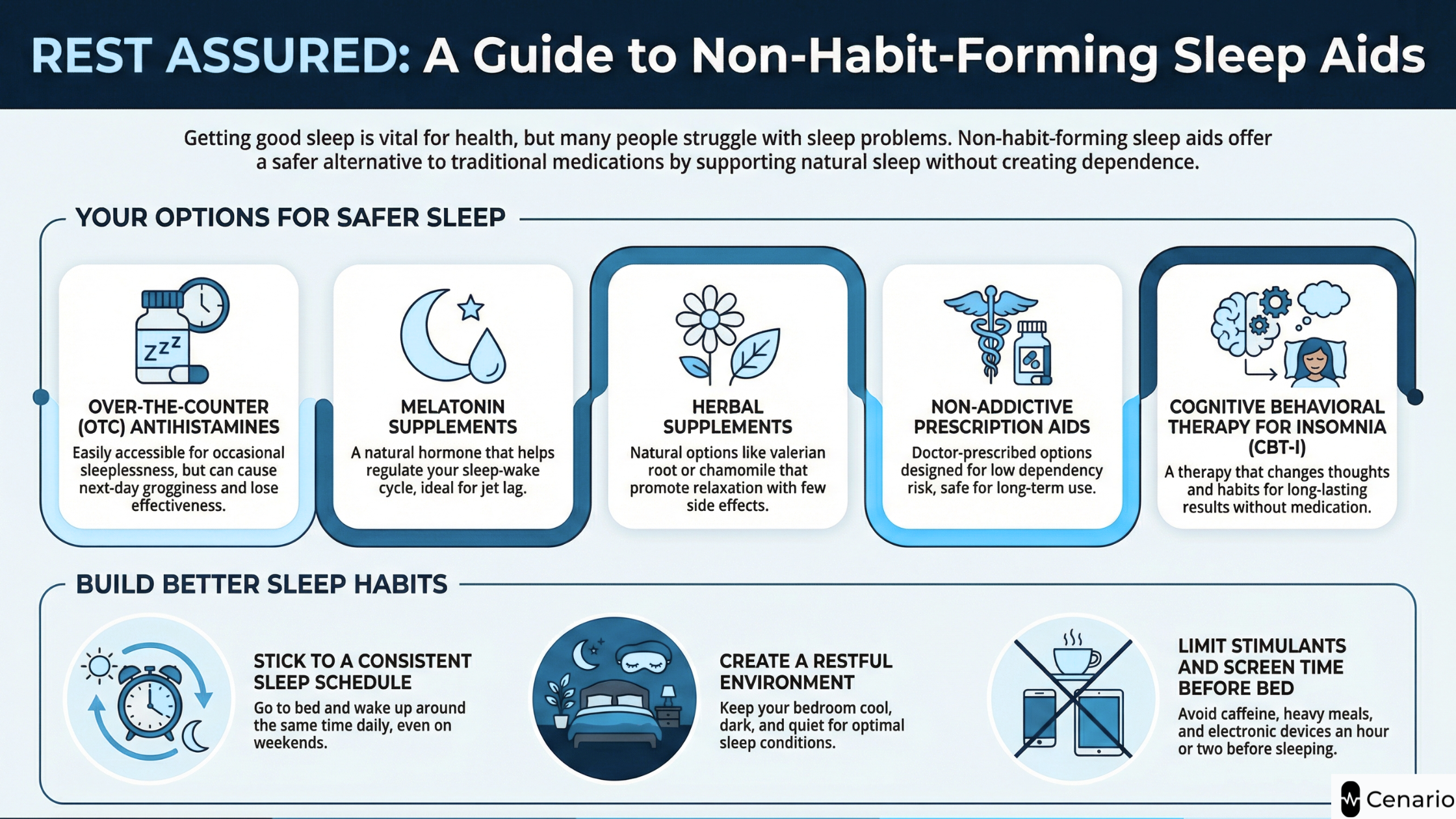
There are several types of sleep aids, including:
- Over-the-counter (OTC) medications
- Melatonin supplements
- Herbal sleep remedies
- Prescription sleep aids designed to avoid dependence
- Cognitive Behavioral Therapy for Insomnia (CBT-I)
Each one works differently and may suit different types of sleep problems. Let’s break them down.
Types of Non-Habit-Forming Sleep Aids
1. Over-the-Counter Antihistamines
Many OTC sleep aids contain active ingredients like diphenhydramine or doxylamine, which are actually antihistamines that make you drowsy. These are popular for the occasional sleepless night and are generally considered non-habit-forming.
Pros:
- Easy to find
- Effective for short-term use
Cons:
- Not ideal for long term use
- Side effects include next-day drowsiness, dry mouth, or feeling groggy
- Can lose effectiveness over time (tolerance)
2. Melatonin Supplements
Melatonin is a hormone your body naturally produces to regulate your sleep-wake cycle. Taking melatonin supplements can be helpful when your body’s internal clock is off—like during travel or shift work.
Pros:
- Supports natural sleep
- Non-habit-forming
- Works well for sleep phase disorders or jet lag
Cons:
- Side effects include headaches or grogginess
- May not be as strong as prescription sleep aids
- Best used for short term sleep issues
3. Herbal Supplements
Natural sleep remedies like valerian root, chamomile, passionflower, or lavender have been used for centuries. These herbal options promote relaxation and are considered low risk for dependence.
Pros:
- Gentle and natural
- Few reported side effects
Cons:
- Effectiveness varies
- Not regulated like medications , potency and purity can differ
- May take time to show results
4. Prescription Sleep Aids (Non-Habit-Forming)
Some newer prescription sleep aids are specifically designed to avoid dependency. Two popular types include:
Ramelteon
Ramelteon mimics melatonin and targets the same receptors in the brain. It’s a great choice for people with chronic insomnia who want to avoid habit-forming drugs.
Orexin Receptor Antagonists
Drugs like suvorexant and lemborexant block orexin, a chemical that keeps you awake. These are effective and have a low risk of addiction.
Pros:
- Safe for long term use under medical guidance
- Low abuse potential
- Help people fall asleep and stay asleep
Cons:
- Side effects include vivid dreams, headaches, or dizziness
- Must be prescribed by a doctor
- May not work the same for everyone
5. Cognitive Behavioral Therapy for Insomnia (CBT-I)
Not all sleep solutions come in a bottle. CBT-I is a type of behavior therapy that helps people change thoughts and habits that interfere with sleep.
Pros:
- No risk of dependence
- Works well for long term sleep improvement
- Backed by strong research
Cons:
- Requires time and effort
- Usually done over several weeks with a trained therapist
Important Considerations Before Choosing a Sleep Aid
Even if a sleep aid is labeled as non-habit-forming, it can still have side effects or limitations:
- OTC medications may cause confusion or feeling groggy, especially in older adults
- Natural sleep aids like valerian root may interact with other medications
- Melatonin and herbal supplements aren’t regulated by the FDA, which can lead to inconsistent dosing
Before starting any sleep aid, especially for long term use, it’s best to talk to a healthcare provider. They can help match the right treatment to your specific type of sleep problem.
Adopting Better Sleep Habits
Sometimes the best solution is improving your sleep habits. A few simple changes can make a big difference:
- Stick to a regular sleep schedule
- Limit screen time before bed
- Avoid caffeine and heavy meals late in the day
- Create a cool, dark, and quiet sleep environment
Combining these habits with the right sleep remedy can improve your sleep more effectively than medication alone.
Pros and Cons Chart: Non-Habit-Forming Sleep Aids
| Option | Pros | Cons |
|---|---|---|
| OTC Antihistamines | Accessible, short-term use | Side effects include drowsiness, not for long term use |
| Melatonin Supplements | Regulates sleep cycles, minimal risk | Less potent, may cause grogginess |
| Herbal Remedies | Natural, generally safe | Varying effectiveness, unregulated quality |
| Ramelteon / Orexin Antagonists | Low risk, doctor-approved | Requires prescription, possible side effects |
| CBT-I | Long-lasting results, no side effects | Takes time and effort |
Final Thoughts
If you’re struggling with occasional sleepless nights or chronic sleep problems, non-habit-forming sleep aids can offer a safe and effective path to better rest. Whether you choose melatonin supplements, herbal remedies, or carefully prescribed sleep aids, making informed decisions and practicing good sleep habits is key to long-term success.
And remember, behavior therapy like Cognitive Behavioral Therapy for Insomnia (CBT-I) is one of the most effective, sustainable solutions available especially for those seeking lasting results without relying on medication.
Ready to improve your sleep?
Take the Cenario Sleep Quiz to get a personalized supplement recommendation tailored to your unique sleep needs, lifestyle, and goals.
Frequently Asked Questions
Can diet affect how well sleep aids work?
Absolutely. Your diet can play a key role in how effective a sleep aid is. Foods high in magnesium, tryptophan, or melatonin such as almonds, bananas, turkey, or tart cherries, can naturally support sleep and enhance the effects of sleep aids. On the flip side, consuming caffeine, alcohol, or heavy meals too close to bedtime may interfere with sleep quality and reduce the effectiveness of the aid.
Are non-habit-forming sleep aids safe for teens or older adults?
Some non-habit-forming options, like melatonin, may be appropriate for both teens and older adults, but dosage and timing are important. Older adults may be more sensitive to side effects like grogginess, and teens may require different formulations. It’s best to consult a healthcare provider before giving sleep aids to individuals in these age groups to ensure safety and proper use.
Can I drive or operate machinery after taking natural sleep aids?
Even though natural or non-habit-forming sleep aids are generally safer, they can still cause drowsiness, reduced alertness, or feeling groggy the next morning. It’s important to understand how your body reacts before driving, operating machinery, or doing anything that requires full focus. Try using the aid on a night when you don’t have early responsibilities to assess its effects.
Do non-habit-forming sleep aids lose effectiveness over time?
Some types, especially OTC antihistamines can lead to tolerance when used frequently, making them less effective over time. Natural options like melatonin or herbal supplements tend to be more stable in terms of long-term effectiveness, though individual responses vary. Rotating use or combining with better sleep habits can help maintain their benefits.