Understanding the Variety of OTC Sleep Aids
Many people experience sleepless nights and look for quick solutions to get a good night’s sleep. Over-the-counter sleep aids (OTC sleep aids) are often the first option people consider because they’re easy to purchase and promise fast relief. But with so many products available, choosing the best OTC sleep aid can be confusing especially when the effectiveness varies widely from person to person.
This guide breaks down the most common options, how they work, their safety concerns, and what to consider before trying them.
Conventional OTC Sleep Aids
The most common conventional sleep aids use first-generation antihistamines, such as:
- Diphenhydramine
- Doxylamine
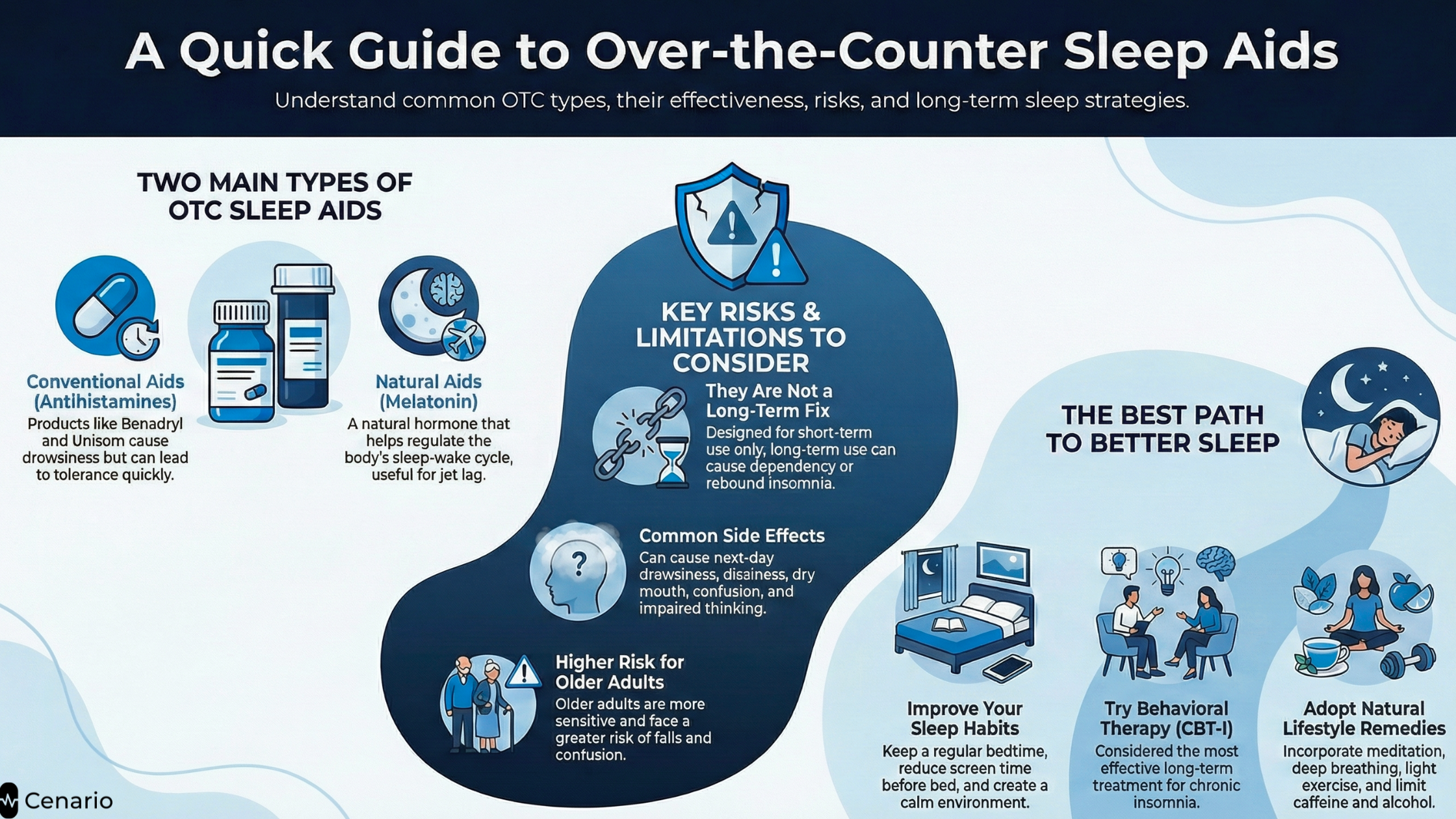
These ingredients are found in products like Benadryl, Nytol, and Unisom. They help people fall asleep by blocking histamine receptors, which causes drowsiness. They can be helpful for short-term sleep troubles or occasional sleeplessness, but they are not ideal for long-term use because tolerance builds quickly.
Side effects include next-day drowsiness, dry mouth, confusion, and impaired thinking. They can also increase the sedative effects of other substances, especially if you do not avoid alcoholic drinks.
Melatonin: The Most Popular Natural Option
Many people prefer natural sleep aids, and melatonin is the most common choice. Melatonin is a hormone your brain naturally produces to regulate your sleep-wake cycle. OTC melatonin helps:
- People with jet lag
- Shift workers
- Those with irregular sleep schedules
Controlled-release melatonin can help maintain sleep through the night, but its effectiveness varies. Even though it’s natural, you should still talk to your health care provider, especially if you are pregnant or breastfeeding.
Effectiveness and Limitations of OTC Sleep Aids
Determining the best OTC sleep aid is difficult because each person responds differently. Studies show that most OTC sleep aids offer modest improvements, often not much better than a placebo.
They may help people fall asleep faster, but they do not fix the root cause of sleep problems. Long-term use increases risks like dependency, tolerance, or rebound insomnia.
Safety Considerations When Using OTC Sleep Aids
Safety should always come first. Be aware that:
- Side effects include dizziness, grogginess, confusion, and impaired coordination.
- Older adults face greater risks, such as falls and memory problems.
- Antihistamine-based sleep aids can interact with other medications.
- Natural does not always mean safe, especially when mixed with alcohol or sedatives.
Always talk to your health care provider before starting any sleep aid.
Comparing Conventional and Natural Sleep Aids
Conventional Options
- Stronger sedative effect
- Better for short-term relief
- Higher risk of side effects
Natural Options
- Used for milder sleep troubles
- Includes melatonin, valerian, magnesium, CBD
- Most lack strong clinical evidence
- Must be chosen with caution
While melatonin is widely studied, ingredients like valerian and CBD have inconsistent research, so they should not replace proven treatments without medical advice.
Different Populations, Different Considerations
Older adults
More sensitive to sedatives → higher risk of confusion and falls.
Pregnant or breastfeeding individuals
Should avoid most OTC sleep aids unless approved by a doctor.
People with chronic conditions
Must evaluate interactions with heart medications, antidepressants, anxiety medications, and asthma drugs.
Women
May respond differently due to hormonal changes affecting the sleep-wake cycle.
Non-Pharmacologic Alternatives: Your Long-Term Answer
OTC sleep aids may help for a short-term fix, but long-term sleep health requires deeper lifestyle and behavioral changes. These strategies work far better for chronic insomnia:
Improve Your Sleep Habits
- Keep a regular bedtime
- Reduce screen time before bed
- Avoid alcoholic drinks late at night
- Create a calm, dark sleep environment
Behavior Therapy
Cognitive-Behavioral Therapy for Insomnia (CBT-I) is considered the most effective long-term treatment. It targets the thoughts and habits that disrupt sleep.
Natural Lifestyle Sleep Remedies
- Meditation
- Deep breathing
- Light exercise
- Limiting caffeine
These approaches strengthen healthy sleep patterns without the risks of medication.
Final Thoughts: What Is the Best OTC Sleep Aid?
The best OTC sleep aid depends on your specific needs:
- Diphenhydramine or doxylamine → Best for short-term use only
- Melatonin → Ideal for regulating the sleep-wake cycle, especially for jet lag
- Natural supplements → Helpful for mild sleep concerns, though research varies
However, no OTC product is a reliable long-term solution. The most sustainable improvements come from building healthy sleep habits, making lifestyle changes, and using behavior therapy to retrain your body’s natural rhythm.
If you want truly effective, personalized sleep support, focus on strategies that strengthen not replace your natural ability to sleep.
Take the Next Step With Cenario
Still unsure which sleep remedy is right for you?
Take the Cenario Quiz to get a personalized supplement recommendation based on your unique sleep patterns, stress levels, and daily routines.
Discover the formula designed to help you sleep deeper, wake refreshed, and feel your best.
Frequently Asked Questions
What are the most common side effects of OTC sleep aids?
Common side effects include drowsiness, dry mouth, dizziness, impaired thinking, and next-day grogginess.
Can OTC sleep aids be used long-term?
No. They are meant for short-term or occasional sleeplessness only. Long-term use may cause tolerance and dependence.
Are natural sleep aids safer?
Not necessarily. While many are marketed as “safe,” their effectiveness varies, and some can interact with medications. Always talk to your health care provider before trying them.
How do I choose the right sleep aid?
Consider:
- Your health conditions
- Other medications you take
- How often you struggle to sleep
- The cause of your sleep issues
Trial and error is common, but guidance from a medical professional is best.