
“`html
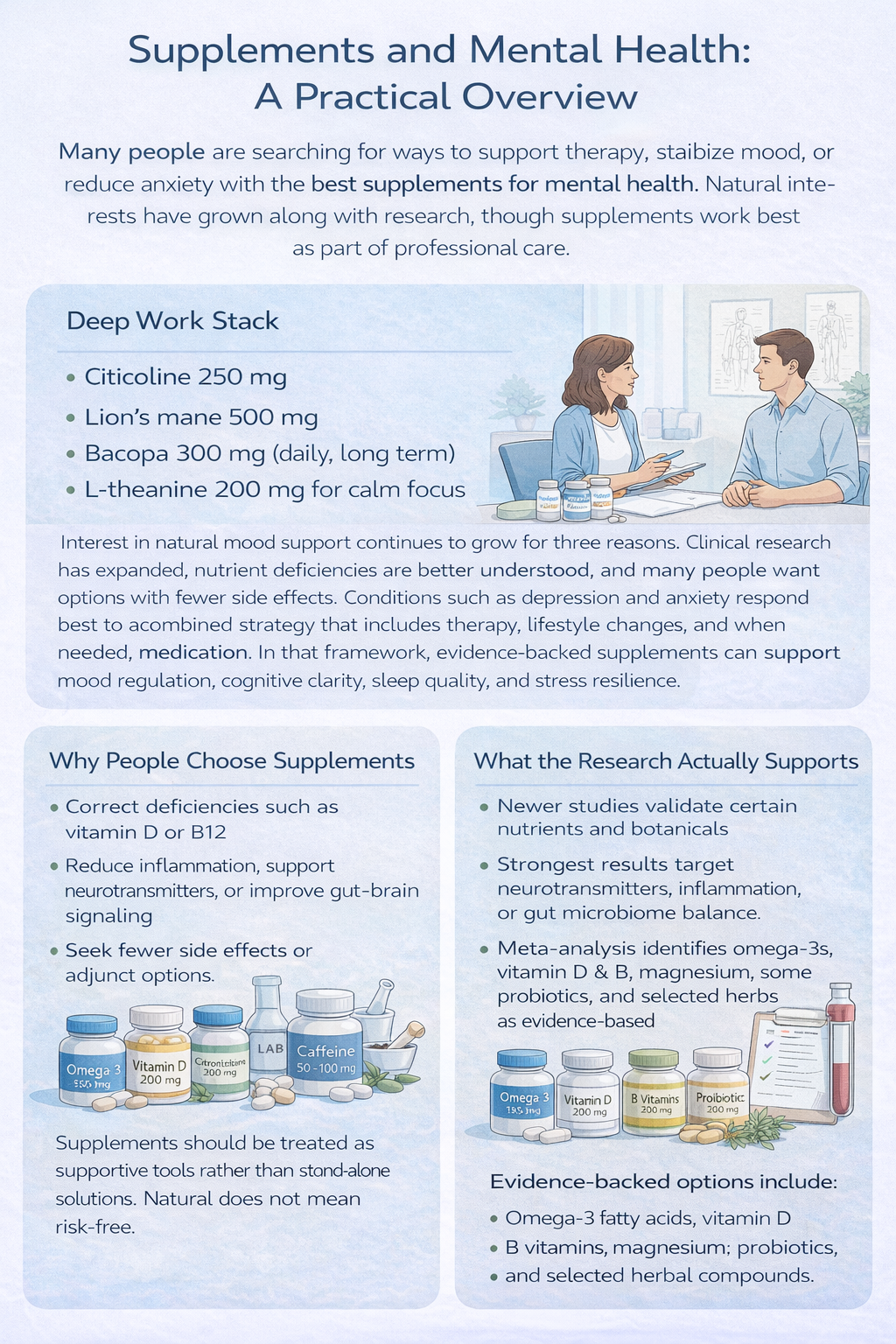
Many people are searching for the best supplements for mental health to support therapy, stabilize mood, or reduce anxiety. Interest in natural options has increased as research improves and as more people look for supportive tools alongside conventional care. Supplements are not a replacement for professional treatment, but when selected carefully and used under guidance, they can provide measurable benefits.
Supplements and mental health: a practical overview
Interest in natural mood support continues to grow for three reasons. Clinical research has expanded, nutrient deficiencies are better understood, and many people want options with fewer side effects. Conditions such as depression and anxiety respond best to a combined strategy that includes therapy, lifestyle changes, and when needed, medication. In that framework, evidence-backed supplements can support mood regulation, cognitive clarity, sleep quality, and stress resilience.
Why people choose supplements
Some people supplement to correct deficiencies such as vitamin D or B12. Others focus on reducing inflammation, supporting neurotransmitter production, or improving gut-brain signaling. Natural does not mean risk-free. Supplements can interact with medications, and quality varies widely across products. That is why supplements should be treated as supportive tools rather than stand-alone solutions.
What the research actually supports
The scientific literature on supplements and mental health has grown substantially. Randomized controlled trials and meta-analyses now support several nutrients and botanicals for reducing symptoms of depression and anxiety. Researchers focus on three main mechanisms: neurotransmitter synthesis, inflammation control, and gut microbiome balance. The strongest results come from targeted, evidence-based choices rather than broad or trendy formulas.
When supplements make sense
Before adding supplements, consider the following:
- Do you have symptoms or lab results suggesting a deficiency?
- Are you taking medications that could interact with supplements?
- Are you using supplements to support therapy rather than replace it?
Evidence-backed options commonly used for mental health support include omega-3 fatty acids, vitamin D, B vitamins, magnesium, probiotics, and selected herbal compounds. Cenario structures these options around individual needs rather than one-size-fits-all stacks.
Dosing and product selection principles
Once you move beyond surface-level advice, results depend almost entirely on three factors: dose, form, and consistency. Many supplements fail not because the ingredient is ineffective, but because the dose is too low, the form is poorly absorbed, or the product quality is unreliable. The guidelines below reflect how these supplements are actually used in research and clinical settings, not marketing labels.
Omega-3 fatty acids
Omega-3s are among the most studied supplements for mood support. The strongest evidence points to EPA rather than DHA as the primary driver of antidepressant effects. EPA influences inflammatory pathways and cell membrane signaling in ways that directly affect neurotransmission.
Most mood studies use a daily EPA intake of around 1.5 to 2 grams. Lower doses often show weak or inconsistent effects. Products should clearly state how much EPA and DHA they contain per serving. If the label only lists total fish oil, it is usually underdosed for mental health purposes.
Form matters. Triglyceride and re-esterified triglyceride forms are better absorbed than ethyl esters. Consistency also matters. Benefits typically emerge after several weeks, not days, because omega-3s need time to incorporate into brain cell membranes.
Vitamin D
Vitamin D acts more like a hormone than a typical vitamin. It influences gene expression, immune signaling, and brain function. Low vitamin D levels are consistently associated with worse mood outcomes, particularly in depression.
Testing blood levels before supplementing is critical. Many people assume they are deficient and take random doses that either do nothing or overshoot. Clinicians often use higher short-term doses to correct deficiency, then transition to a maintenance dose. Mood improvements usually track with blood levels rising into the optimal range, not with a specific pill dose.
Vitamin D is fat-soluble, so it should be taken with food containing fat. Re-testing every few months is standard practice to ensure levels stay in range and avoid excess.
B vitamins and methylated folate
B vitamins play a direct role in neurotransmitter synthesis, including serotonin, dopamine, and norepinephrine. Folate and B12 are especially important for methylation, a biochemical process tied to mood regulation.
L-methylfolate is preferred over folic acid because it is already in its active form. Some people have genetic variations that limit their ability to convert folic acid, which can blunt benefits or cause side effects. Clinical studies using methylated folate often show improved antidepressant response when it is used as an add-on rather than a stand-alone treatment.
Vitamin B6 supports the conversion of amino acids into neurotransmitters, while B12 helps maintain nerve function and energy metabolism. Balanced dosing matters. Extremely high doses without medical supervision are unnecessary and sometimes counterproductive.
Magnesium
Magnesium influences the nervous system by regulating NMDA receptors and calming excitatory signaling. Low magnesium status is linked to anxiety, poor sleep, and increased stress sensitivity.
Magnesium glycinate is commonly used because it is well tolerated and less likely to cause digestive upset. It is often chosen for relaxation, sleep quality, and general stress support.
Magnesium L-threonate is different. It was developed specifically to increase magnesium levels in the brain. Research suggests it may support cognitive function, mental clarity, and stress resilience. The tradeoff is cost and the need for consistent dosing over time. Effects tend to build gradually rather than feeling immediate.
Digestive tolerance depends heavily on the form and dose. If loose stools occur, the dose is too high or the form is poorly suited.
Probiotics
Probiotics influence mental health through the gut-brain axis, which connects the digestive system to mood and stress regulation. Not all probiotics affect mood, and many generic products are unlikely to help.
Strain specificity is critical. Certain Lactobacillus and Bifidobacterium strains are linked to reduced anxiety, improved stress response, and better emotional regulation. The product should list strains clearly, not just species names.
Consistency matters more than dose. Probiotics need time to influence gut signaling and inflammation pathways. Most studies evaluate outcomes after 6 to 8 weeks of daily use. Judging results after only a few days is a common mistake.
Storage, expiration dating, and viable counts at expiration are key quality markers. Without these, there is no guarantee the product contains what the label claims.
Personalized supplements, not generic stacks
Cenario uses clinically informed logic to recommend supplements that support mood, stress, sleep, and focus. Take **Cenario Quiz** now!
Emerging supplements and single-trial options
Some botanicals and compounds show promising results but lack the volume or consistency of evidence seen with first-line options. These supplements require individualized use, conservative dosing, and clear expectations. They are best considered experimental adjuncts rather than foundational tools.
Saffron and ashwagandha
Saffron is one of the more convincing emerging options. Multiple randomized trials show reductions in depressive symptoms comparable to standard antidepressants at doses around 30 mg per day. The proposed mechanisms include serotonin modulation, antioxidant effects, and reduced neuroinflammation. Despite positive results, trials are relatively small and short, so saffron should be viewed as supportive rather than definitive treatment.
Ashwagandha is primarily studied for stress and anxiety rather than major depression. Standardized root extracts in the range of 300 to 500 mg taken twice daily reduce cortisol levels and perceived stress scores in several trials. It appears most useful for anxiety driven by chronic stress or burnout. Effects are modest and gradual, and it should be avoided in people with certain autoimmune or thyroid conditions without supervision.
Acetyl-L-carnitine, zinc, rhodiola, and related compounds
Acetyl-L-carnitine has shown benefit in late-life depression, possibly due to effects on mitochondrial energy production and neuroplasticity. Results are not consistent across age groups, which limits its general use.
Zinc plays a role in synaptic signaling and neuroinflammation. Supplementation in the range of 25 to 30 mg daily may improve antidepressant response when baseline levels are low. Supplementing zinc without deficiency offers little benefit and increases the risk of copper imbalance.
Rhodiola and lavender oil extracts show anxiety-reducing effects in some trials, particularly for stress-related fatigue and mild anxiety. Results vary widely depending on extract standardization and study design.
Lithium orotate and taurine are sometimes discussed for mood stabilization. Evidence is limited, dosing is unclear, and safety margins are narrow. These compounds should never be used without medical oversight.
Safety, interactions, and monitoring
Safety outweighs enthusiasm. Supplements can alter drug metabolism, amplify side effects, or mask worsening symptoms if used carelessly. Clinical guidance is not optional when combining supplements with prescription treatments.
St. John’s Wort induces liver enzymes that lower the effectiveness of many medications, including hormonal birth control, immunosuppressants, anticoagulants, and antidepressants. It can also increase serotonin levels when combined with SSRIs, raising the risk of adverse reactions.
High-dose omega-3 fatty acids may increase bleeding risk when combined with anticoagulants or antiplatelet drugs. Vitamin D and zinc can accumulate to toxic levels when used long term without monitoring. Probiotics should be avoided or used cautiously in people with severe immune compromise. Vitamin B6 intake above 200 mg daily over extended periods can cause nerve damage.
These risks are manageable, but only when acknowledged and monitored.
How long until results appear?
Supplements rarely produce rapid changes. Most require consistent use for 6 to 12 weeks before meaningful effects appear. Omega-3s and probiotics often need at least 8 weeks to influence inflammatory signaling or gut-brain pathways. Early fluctuations do not predict long-term outcomes.
Tracking symptoms with a simple rating scale or structured mood journal provides a more accurate signal than subjective day-to-day impressions. Review progress periodically with a clinician rather than making frequent adjustments.
Practical steps to start safely
- Obtain baseline labs when appropriate, especially vitamin D, B12, folate, and basic metabolic markers
- Select products with third-party testing, clear ingredient lists, and transparent dosing
- Introduce one supplement at a time to isolate effects and side effects
- Maintain communication with your clinician, particularly when combining supplements with antidepressants or anxiety medications
Final perspective
Emerging supplements can add value, but only when used deliberately. The biggest mistakes are stacking multiple experimental compounds, chasing single-study results, or treating supplements as substitutes for structured care. Thoughtful selection, conservative dosing, and ongoing monitoring turn the best supplements for mental health into a useful extension of therapy and lifestyle change rather than a distraction from them.
Still unsure what to take?
Answer a few questions and get a personalized supplement recommendation instantly. Take **Cenarios quiz now!**
Frequently asked questions
Do supplements really help with mental health?
Some supplements can help when they target real biological gaps such as nutrient deficiencies, inflammation, or gut-brain signaling. They work best as support alongside therapy, lifestyle changes, and medical care. Supplements are not cures, but evidence-backed options can improve response to other treatments.
How long does it take to see results?
Most supplements require consistent use for 6 to 12 weeks before meaningful changes appear. Omega-3s and probiotics often take at least 8 weeks. Immediate effects are rare and usually not sustained.
Can I take supplements with antidepressants or anxiety medication?
In many cases yes, but not without checking first. Some supplements interact with prescription drugs or change how they are metabolized. Always review combinations with a clinician, especially if you take SSRIs, SNRIs, mood stabilizers, or blood thinners.
Are natural supplements safer than medication?
Not automatically. Natural products can still cause side effects, interactions, or toxicity at high doses. Safety depends on the ingredient, dose, quality, and your individual health profile.
Should I test before supplementing?
Testing improves outcomes. Vitamin D, B12, and folate are common examples where lab values guide dosing and reduce guesswork. Supplementing blindly increases the chance of wasted time or side effects.
Can supplements replace therapy or medication?
No. Supplements are best used to support treatment, not replace it. Using them as a substitute for therapy or prescribed care often delays improvement.
“`