
Understanding the memory supplement landscape
As 2025 presses on, the search for a sharper mind has never been more active. People juggling work, study, and family increasingly look to the best supplement for memory as one tool to protect focus and recall. The interest is real, but the landscape is noisy: polished marketing sits next to science-forward reviews, and not every product lives up to its claims.
The market blends commercial product pages with evidence-based guides. Many companies push proprietary blends and urgency-driven offers, while reputable reviews compare ingredients and trial data. Common names keep appearing across both types of pages — phosphatidylserine, omega-3s, magnesium L-threonate, L-theanine and curcumin — yet none is a universal answer. The best supplement for memory depends on your goals, age, health status and whether you need help with short-term recall, working memory or sustained focus.
Why there is no single best option
Choosing one “best” product ignores how personal cognitive needs are. Factors that change the recommendation include:
- Age and baseline cognition — older adults may need different support than younger adults.
- Specific goals — improving short-term recall is different from boosting attention or executive function.
- Medical context — existing deficiencies or medications can shift safe choices.
These differences explain why reviews often rank multiple supplements rather than naming a single winner.
How to separate hype from evidence
Look for clear trial data, third-party testing and transparent ingredient lists. Reputable evaluations note effect size, study length and who was studied. Be cautious of broad claims that a product “restores memory” without backing. Also prioritize correcting common nutrient gaps like vitamin B12 and vitamin D before adding targeted memory enhancers.
Lifestyle first: diet, sleep, and exercise
Supplementation should not replace foundational habits. Regular exercise, consistent sleep, stress management and a balanced diet are proven ways to support cognitive health and make any supplement more effective. Combining lifestyle changes with thoughtfully chosen supplements yields the best chance of real improvement.
Best supplement for memory: what the trials show
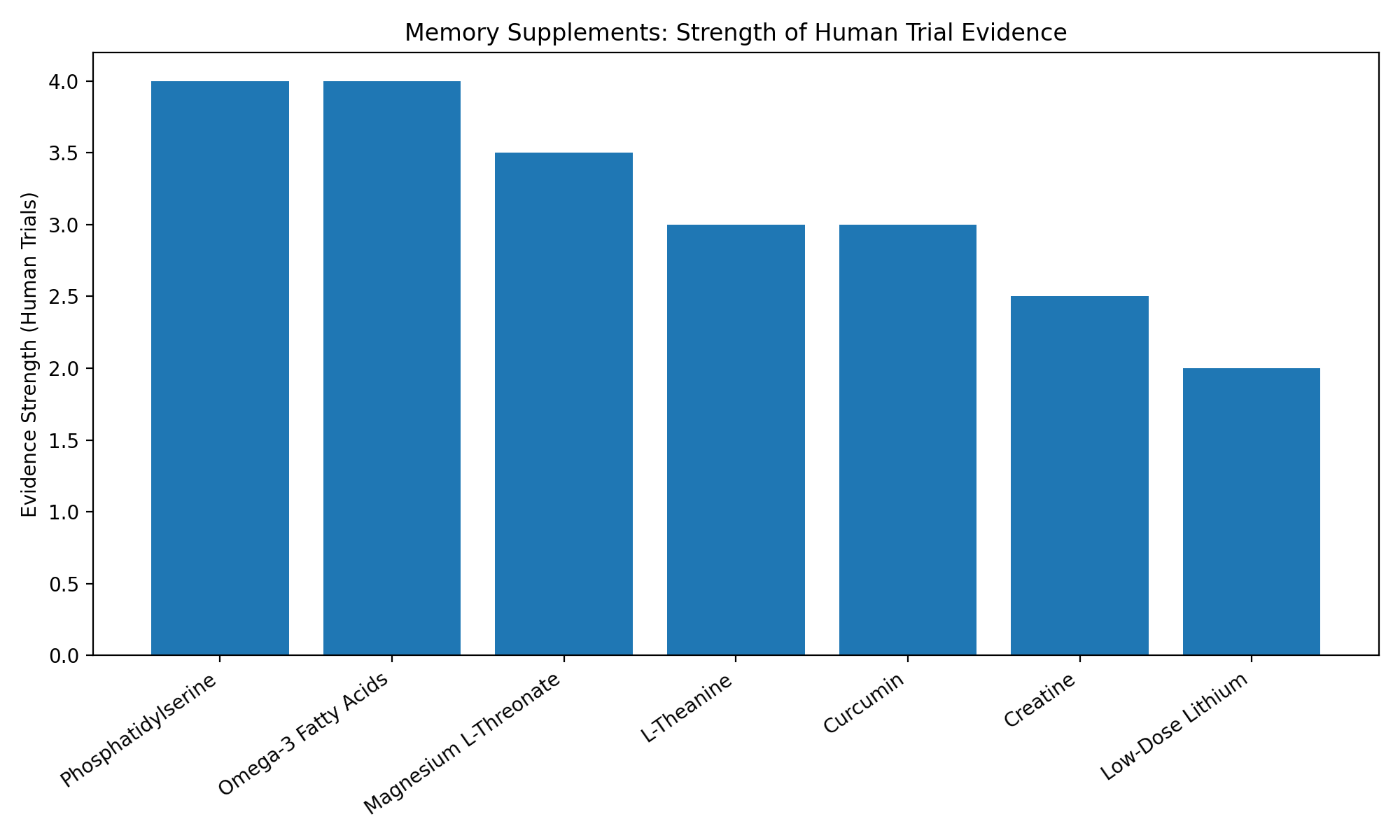
Below are the supplements with the strongest human trial data and how they may help different types of memory. This section focuses on mechanism, commonly studied doses, and the quality of evidence so you can judge which memory boosters might suit your needs.
Phosphatidylserine (PS)
How it works: PS supports cell membrane structure and signaling in neurons, which may help age-related cognitive decline. Evidence strength: multiple randomized trials in older adults show small to moderate benefits for attention and recall.
- Commonly studied dose: 100 to 300 mg per day.
- When it may help: mild age-related memory challenges and slower processing speed.
- Safety notes: generally well tolerated; check labels for soy or lecithin sources if you have allergies.
Omega-3 fatty acids
How it works: DHA and EPA support membrane fluidity, neuroinflammation regulation, and cerebral blood flow. Evidence strength: consistent associations with cognitive health and randomized trials that show modest memory benefits, even in people without clear deficiency.
- Commonly studied dose: aim for total EPA+DHA around 1 gram daily in many trials.
- When it may help: long-term brain health, verbal memory, and age-related decline prevention.
- Safety notes: may thin blood at high doses; discuss with your clinician if you take anticoagulants.
Magnesium L-threonate
How it works: this magnesium form crosses the blood-brain barrier more effectively and may enhance synaptic plasticity linked to working memory. Evidence strength: randomized trials and translational research report improvements in short-term and working memory.
- Commonly studied dose: magnesium L-threonate supplements in trials typically provide the L-threonate form in multi-gram daily doses.
- When it may help: people seeking better working memory and cognitive flexibility.
- Safety notes: can cause mild gastrointestinal upset at higher doses; adjust as needed.
L-theanine and curcumin
How they work: L-theanine promotes relaxed attention and may boost verbal fluency and executive function in weeks. Curcumin is an anti-inflammatory polyphenol with some evidence for improving working memory and reducing markers linked to brain aging when delivered in bioavailable formulations.
- Commonly studied doses: L-theanine around 100 to 200 mg; curcumin trials often use bioavailable 500 mg twice daily equivalents.
- When they may help: L-theanine for focus plus calm; curcumin for inflammatory-driven cognitive changes.
- Safety notes: curcumin can interact with blood thinners and some medications; seek medical advice if you are on treatment.
Emerging options to watch
Creatine has growing support for short-term memory and mental fatigue, especially under stress or sleep loss. Low-dose lithium showed preserved cognitive scores in a 15-month trial in older adults, but it requires careful medical oversight. Green oat extract is another plant-based option being researched for attention and recall.
- Creatine typical dose: 3 to 5 grams daily in cognition studies.
- Low-dose lithium: trials used microdoses much lower than prescription levels; monitoring is essential.
Evidence quality and what it means
Not all trials are equal. Look for randomized controlled trials with clear endpoints, adequate duration, and appropriate participant groups. Short, single-study results are promising but need replication. For many of these supplements the effect sizes are modest, meaning they often work best as part of a wider plan rather than as stand-alone fixes.
Considerations, interactions and quality checks
Practical precautions:
- Get basic blood tests first (for example B12, vitamin D and thyroid) so you are not treating an underlying deficiency without knowing it.
- Watch for interactions: ginkgo and curcumin can affect blood thinning; lithium and creatine require medical review if you have kidney issues.
- Prefer supplements with third-party testing seals and clear ingredient breakdowns. Look for NSF, USP or ConsumerLab verification and batch testing information on the label.
How to choose and next steps
Decide by matching evidence to your primary goal: working memory, verbal recall, or general brain health. Start with a single, well-studied ingredient at a commonly used dose and give it several weeks to months, tracking changes.
Choosing the best supplement for memory in 2025 means balancing evidence, safety and quality rather than chasing one single product claim. Thoughtful selection and clinical guidance will help you get the most benefit with the least risk.
Considerations and cautions
Before you pick the best supplement for memory, take a step back and review your health picture. Correcting nutrient gaps like vitamin B12, vitamin D and iron often yields larger benefits than adding a nootropic. Ask a clinician for basic blood work so you are treating the right problem rather than masking an underlying deficit.
Be mindful of interactions and medical conditions. Some ingredients can affect blood clotting, blood pressure or kidney function. For example, curcumin and ginkgo may increase bleeding risk when combined with anticoagulants. Low-dose lithium and high creatine intake need medical oversight if you have kidney concerns. If you take prescription medications, check with your prescriber before starting a new regimen.
How to match supplements to your needs
Decide what you want to improve. Working memory, verbal recall and overall brain protection are related but distinct outcomes. Choose one well-studied ingredient that targets your goal:
- Working memory: magnesium L-threonate or creatine have specific trial support.
- Age-related decline: phosphatidylserine and omega-3s show consistent benefits in older adults.
- Short-term focus and calm: L-theanine and low-dose caffeine combinations perform well for attention tasks.
Start low and go slow. Introduce a single supplement at a standard trial dose and track improvements for 8 to 12 weeks before layering additional options. Avoid large proprietary stacks until you know how individual ingredients affect you.
Quality checks and third-party testing
Quality matters more than marketing. Look for clear labels with exact ingredient amounts and avoid vague “proprietary blends.” Third-party seals from NSF, USP or ConsumerLab indicate the product contains what the label says and is tested for contaminants. Batch testing and transparent manufacturing practices reduce risk.
When comparing products, prioritize formulations backed by human trials rather than animal or cell studies alone. Match the studied dose to the label. If a product contains a new delivery system or enhanced absorption claim, look for human evidence that the change actually improves cognitive outcomes.
How to monitor benefits and safety
Track objective and subjective measures. Objective tests might include timed recall tasks, work productivity metrics or specific cognitive apps. Subjective notes should cover energy, mood and sleep. Keep a simple log of dose, timing and changes in cognition or side effects.
If you notice new symptoms like persistent headaches, digestive upset, unusual bruising or mood shifts, stop the supplement and consult your clinician. Routine follow up blood tests are appropriate for ingredients that affect electrolytes or organ function, such as lithium or high-dose vitamin regimens.
Practical next steps
To find the best supplement for memory for your situation, combine objective evidence with personal context. Use third-party tested products, match ingredients to your goals, and involve a health professional for baseline testing and follow up.
Choosing the best supplement for memory in 2025 is a measured process, not a quick fix. Pair evidence-backed supplements with solid sleep, exercise and nutrition habits, monitor outcomes, and adjust with clinical input. When you do this, small gains add up to meaningful improvement over time.
Frequently Asked Questions
Are memory supplements safe for seniors?
Many supplements shown to help older adults are safe when used at studied doses, but seniors should prioritize baseline testing and consult a clinician. The best supplement for memory in older adults often starts with phosphatidylserine or omega-3s combined with monitoring for interactions.
How long until I notice effects from a memory supplement?
Timing varies by ingredient. Some people notice changes in weeks with L-theanine or caffeine pairings, while agents that affect neuroplasticity like magnesium L-threonate or omega-3s may take months. Track progress for at least 8 to 12 weeks to judge if the best supplement for memory is working for you.
Can I take multiple memory supplements together?
Stacking can be effective but increases interaction risk. Start with one evidence-backed ingredient, confirm tolerance, then add a complementary option. Always check with a healthcare provider to ensure combining items is safe and that the combined plan still qualifies as the best supplement for memory for your needs.
Do I need blood tests before starting a memory supplement?
Basic testing for B12, vitamin D, thyroid and kidney function is recommended. Correcting deficiencies often improves cognition more than new products. Testing helps you and your clinician choose the best supplement for memory with the least risk.