
In today’s fast-paced world, keeping your brain sharp is more important than ever. Whether you’re a student trying to focus, a professional juggling tasks, or an older adult looking to protect memory and thinking skills, supporting your cognitive health is essential.
One of the best ways to improve your brain’s performance is through proper nutrition. Specific vitamins and nutrients are known to improve cognitive function, support brain cells, and even reduce the risk of cognitive decline. In this article, we’ll explore the top vitamins for brain function and mental clarity, how they work, and the best sources to include in your diet.
1. Vitamin B12 – The Brain Booster
Vitamin B12 plays a crucial role in the health of your nervous system. It helps produce red blood cells and supports the development of neurotransmitters—chemicals that brain cells use to communicate.
Benefits:
- Improves memory and concentration
- Reduces brain fog
- May help prevent mild cognitive impairment and brain shrinkage in older adults
Natural Sources:
- Meat, fish, and poultry
- Eggs and dairy products
- Fortified cereals and plant-based milk
Note: B12 deficiency is common among older adults and vegans. Talk to a doctor if you think you may need a supplement.
2. Vitamin D – The Mood Stabilizer
Known as the sunshine vitamin, Vitamin D is important for mood balance and brain development. Research and clinical trials have linked low Vitamin D levels with depression and cognitive decline.
Benefits:
- Regulates mood and emotional health
- Supports memory and learning
- May reduce the risk of age-related cognitive disorders
Natural Sources:
- Sunlight (15–20 minutes a day)
- Fatty fish (like salmon and mackerel)
- Fortified dairy and plant-based drinks
3. Vitamin E – The Antioxidant Shield
Vitamin E is a strong antioxidant that protects your brain from oxidative stress, which can damage brain cells and lead to cognitive problems over time.
Benefits:
- Protects neurons and brain tissue
- May slow cognitive decline in conditions like Alzheimer’s
- Promotes long-term brain health
Natural Sources:
- Nuts and seeds (almonds, sunflower seeds)
- Leafy greens (spinach, kale)
- Vegetable oils (sunflower, safflower)
4. Vitamin C – The Stress Fighter
Best known for its immune benefits, Vitamin C also supports the brain by helping produce neurotransmitters like dopamine. It’s key for mental focus and reducing mental fatigue.
Benefits:
- Increases attention and focus
- Reduces oxidative stress in the brain
- May support cognitive function and memory
Natural Sources:
- Citrus fruits (oranges, lemons)
- Bell peppers and broccoli
- Berries (strawberries, blueberries)
5. Vitamin B6 – The Mood and Energy Enhancer
Vitamin B6 helps make serotonin and dopamine—chemicals that affect your mood and thinking. It’s also involved in energy production and healthy brain metabolism.
Benefits:
- Boosts mood and reduces symptoms of depression
- Supports memory and brain energy
- Helps maintain overall cognitive health
Natural Sources:
- Poultry (chicken, turkey), fish
- Bananas and avocados
- Whole grains and fortified cereals
Bonus: Ginkgo Biloba – The Natural Memory Herb
While not a vitamin, ginkgo biloba is a popular dietary supplements used to support memory and mental sharpness. Some clinical trials suggest it may help with mild cognitive impairment, especially in older adults.
Benefits:
- May improve blood flow to the brain
- Can help with memory and focus
- Often used in traditional medicine for brain aging
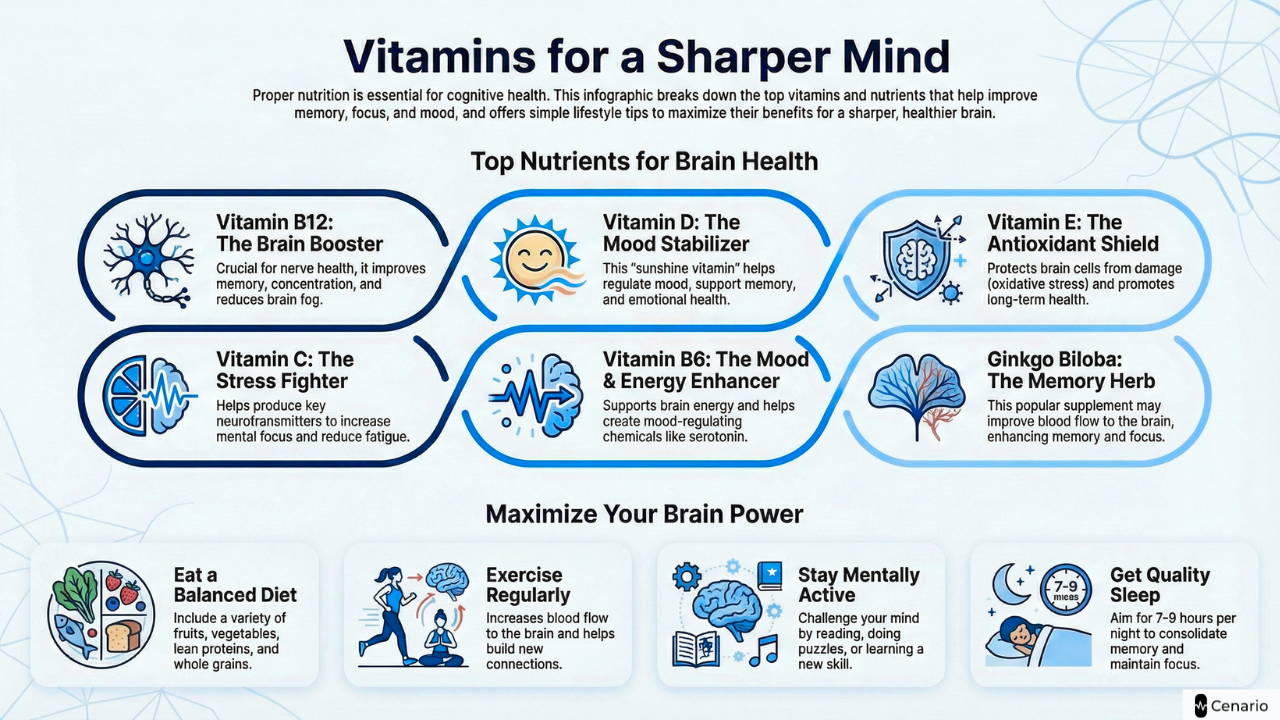
Tips for Maximizing Brain Health
To get the most out of these brain-boosting vitamins, combine them with a healthy lifestyle:
Eat a Balanced Diet
Include fruits, vegetables, lean proteins, and whole grains for overall brain health.
Exercise Regularly
Physical activity increases blood flow to the brain and helps grow new connections between brain cells.
Keep Mentally Active
Read, do puzzles, or learn something new to keep your mind sharp.
Sleep Well
Poor sleep harms memory and focus. Aim for 7–9 hours per night.
Consider Supplements
If your diet is lacking, speak to a healthcare provider about dietary supplements to ensure you’re getting what your brain needs.
Final Thoughts
Your brain controls everything you do from thinking and learning to feeling and reacting. Taking care of it is vital, especially as you age. By including key vitamins like B12, D, E, C, and B6 in your routine and possibly ginkgo biloba you can support stronger memory, better focus, and long-term cognitive function.
Whether you get these nutrients through food or dietary supplements, the right support can improve your mental clarity and overall quality of life.
So start today, your brain will thank you tomorrow.
Take our Supplement Quiz and get a personalized plan!
Frequently Asked Questions
What is the best vitamin for memory and focus?
While several vitamins contribute to brain health, Vitamin B12 is often considered the most important for memory and focus. It supports the nervous system and helps form neurotransmitters, which are essential for clear thinking and concentration. Vitamin D and Vitamin B6 also play key roles in mood and mental performance.
Can dietary supplements really improve brain function?
Yes, dietary supplements can help improve cognitive function, especially if you have a deficiency. Vitamins like B12, D, E, and C have been studied in clinical trials for their positive effects on memory, focus, and overall cognitive health. However, supplements work best when combined with a healthy diet and lifestyle.
Is Ginkgo Biloba safe for older adults?
Ginkgo biloba is commonly used to support memory and reduce mild cognitive impairment in older adults. While generally considered safe, it can interact with certain medications, especially blood thinners. Always consult a healthcare provider before starting any new supplement.
.