

In today’s world of modern mental health care, choosing the right therapeutic approach is essential. One of the most respected and time-tested forms of therapy is Adlerian therapy, developed by Alfred Adler, a pioneer in psychology. Unlike other models that focus mainly on problems or diagnoses, Adlerian therapy is a solution-focused, strength-based method that aims to understand a person’s unique experience and help them grow socially, emotionally, and personally.
In this blog post, we’ll explore Adlerian therapy techniques, their connection to Adlerian theory, and how these strategies are applied in modern counseling and psychotherapy. Whether you’re a student, therapist-in-training, or someone interested in self-help, this guide is designed to be informative, easy to read, and highly useful.
What is Adlerian Therapy?
Adlerian therapy is a type of individual psychotherapy that was developed by Alfred Adler, an Austrian medical doctor and psychotherapist. He broke away from Freud’s psychoanalytic approach to form his own school of thought called Individual Psychology, now known as Adlerian psychology.
This therapeutic model focuses primarily on understanding a person’s goals, lifestyle, and early childhood experiences to create lasting behavioral change. It is widely used in both individual and group therapy, educational counseling, and even organizational development.
Foundations of Adlerian Theory
To truly understand how Adlerian therapy works, it’s important to first learn about the ideas behind it. These ideas were developed by Alfred Adler, an Austrian psychologist and medical doctor. He created a method called Individual Psychology, which views each person as a whole individual, not just a mix of thoughts or behaviors. Adler believed that people are motivated by goals, shaped by their experiences, and strongly influenced by their relationships with others.
Unlike other psychological theories that focus only on inner conflict or mental illness, Adlerian theory focuses on personal growth, social connection, and the importance of community. These ideas have been studied in depth and continue to be explored in the Journal of Individual Psychology, a leading resource for professionals using Adlerian approaches in counseling and psychotherapy.
Here are the five core principles that make up the foundation of Adlerian psychology:
1. Holism
Adler believed that people should be seen as whole beings, not just as a set of separate parts like emotions, thoughts, or behaviors. He explained that the mind, body, and spirit work together, and all parts of a person must be understood in relation to each other. For this reason, Adlerian therapists don’t just focus on symptoms they look at a person’s entire life: their relationships, values, goals, and life story. This helps people realize they are more than their problems and that they have the power to change and grow.
2. Social Interest (Gemeinschaftsgefühl)
A key idea in Adlerian theory is social interest, which means caring for others and feeling a sense of belonging. Adler believed that true mental health comes from being connected to others and contributing to something larger than yourself. People who lack social interest may feel lonely, self-focused, or emotionally unwell. Adlerian therapy helps build this connection, so individuals feel supported and more involved in their families, friendships, and communities.
3. Goal Orientation
Adler taught that all behavior has a purpose, even if we don’t realize it. People are always trying to reach personal goals, such as being accepted, respected, or loved—based on what they believe is important. For example, a student who constantly jokes in class might be trying to gain attention or avoid feeling invisible. In therapy, discovering these hidden goals helps people understand why they behave the way they do and learn better ways to reach those goals.
4. Lifestyle
In Adlerian psychology, a person’s lifestyle is not about fashion or habits, it’s their unique way of thinking, feeling, and acting. Most people form their lifestyle by the time they are around five years old, based on their early experiences, family roles, and view of the world. This lifestyle includes personal beliefs like “I must be perfect to be loved” or “People can’t be trusted.” While these beliefs help us get through life, they can also be mistaken and lead to unhealthy choices. Therapy helps people recognize these patterns and change them to create a healthier, more balanced way of living.
5. Inferiority and Superiority
Adler believed that everyone feels inferior at times. These feelings are natural and can actually be helpful if they motivate us to grow, learn, and improve ourselves. He called this the “striving for superiority,” which means trying to be better, not better than others, but better than your past self. However, when people try to cover up their insecurities by seeking power, control, or perfection, problems can arise. Adlerian therapy helps people understand and manage these feelings so they can build real self-worth without needing to prove themselves to others.
The Role of Early Recollections in Adlerian Therapy
One of the most unique tools in Adlerian therapy is the use of early recollections of the client’s earliest memories, typically before age 10. These memories are not analyzed for factual accuracy but for what they reveal about how the person views themselves, others, and the world. Adler believed that our early memories reflect the beliefs, fears, and goals that shape our current behavior and decisions. In therapy, exploring these memories helps uncover the client’s private logic, their internal belief system and allows them to identify and challenge patterns that may no longer be helpful.
Why Choose Adlerian Therapy?
Adlerian therapy offers a practical, encouraging, and goal-oriented approach to mental health. It is both solution-focused and evidence-based, meaning it concentrates on what works rather than just analyzing what went wrong. Instead of labeling behaviors as problems, it focuses on helping clients understand their motivations and develop healthier ways of thinking, feeling, and acting. This therapeutic model emphasizes growth, social connection, and personal responsibility, making it ideal for people seeking long-term, meaningful change.
Some of the key benefits of Adlerian therapy include:
Increased self-awareness and confidence
Clients gain insight into how their beliefs and early experiences shape their current behavior, allowing them to make intentional, empowered choices.
Improved relationships and communication
By learning empathy and understanding personal dynamics, clients often experience stronger, more respectful relationships in both personal and social settings.
Encouragement of personal responsibility
Adlerian therapy helps individuals recognize their role in shaping their life, promoting a sense of control and accountability rather than blame or helplessness.
Support for long-term behavioral change
Instead of quick fixes, this approach helps clients uncover and change the underlying patterns that drive unhelpful behaviors.
Flexibility in different settings
Adlerian principles can be successfully applied in individual therapy, group therapy, family counseling, and even educational or organizational environments.
Whether you’re navigating emotional challenges, relationship issues, or simply want to grow as a person, Adlerian therapy provides tools and strategies that support not just healing—but lasting transformation.
Adlerian Therapy in Group Counseling Settings
Adlerian therapy is highly effective in group counseling, especially because of its strong focus on social interest, cooperation, and encouragement. In group settings, individuals have the chance to explore their personal goals and behaviors in a social context, which can mirror real-life relationships and challenges. Therapists help group members understand their lifestyle patterns, give and receive feedback, and develop more socially connected ways of thinking and behaving. Group sessions also promote mutual respect, empathy, and shared growth—making Adlerian group therapy a powerful method for change in schools, rehabilitation programs, and community mental health settings.
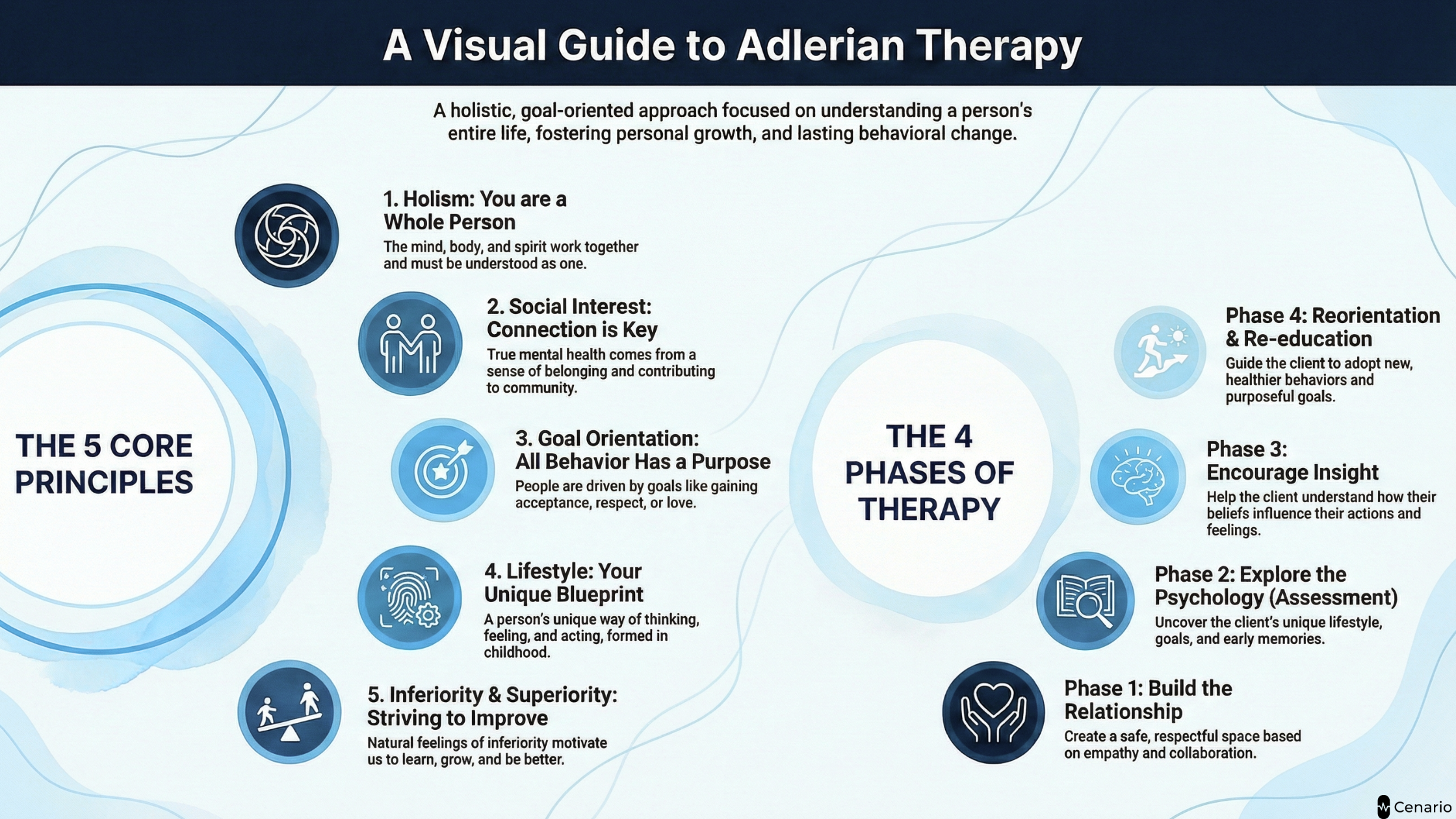
The Four Phases of Adlerian Therapy
Adlerian therapy typically follows four structured stages, each involving specific techniques. These stages help clients move from self-understanding to real-world change.
1. Building the Therapeutic Relationship
Before diving into analysis or advice, the therapist creates a warm, respectful relationship with the client. Therapy offers the client a safe space to talk openly without fear of judgment.
Techniques Used:
- Empathy and Encouragement: Therapists show deep understanding and belief in the client’s potential.
- Collaborative Dialogue: Therapist and client work together as equals.
- Respectful Curiosity: The therapist asks questions that show interest, not interrogation.
2. Exploring the Individual’s Psychology (Lifestyle Assessment)
This stage helps uncover the client’s unique lifestyle, which includes beliefs, goals, early childhood experiences, and family dynamics.
Techniques Used:
- Family Constellation: Looking at the client’s position in the family and how it shaped their behavior.
- Early Recollections (ERs): Asking clients to recall their earliest memories to reveal their core beliefs.
- Private Logic: Identifying the personal belief systems clients have developed, even if those beliefs are flawed.
3. Encouraging Insight and Self-Understanding
Once a client’s lifestyle and beliefs are clear, the next step is to help them understand why they think and act the way they do.
Techniques Used:
- Interpretation: Therapists point out patterns in the client’s thoughts and behavior.
- Socratic Questioning: Asking thoughtful questions to help the client discover insights on their own.
- Reframing: Helping clients view challenges from a new, more empowering angle.
4. Reorientation and Re-education
The final stage involves creating change. Clients are guided to try new behaviors and adopt new beliefs that are healthier, more social, and more purposeful.
Techniques Used:
- Acting “As If”: Encouraging the client to act like the person they want to be.
- Catching Oneself: Learning to notice unhelpful behaviors or thoughts before they take control.
- Homework Assignments: Trying out new actions outside of therapy to reinforce change.
- Encouragement Over Praise: Emphasizing growth and effort, not just success.
Key Adlerian Techniques in Action
Here are some well-known Adlerian tools that help people create lasting change:
The Question
“If your problem were gone, what would be different in your life?”
This simple question helps identify the purpose behind the problem and what the client might be avoiding.
Spitting in the Client’s Soup
This metaphor means “spoiling” a behavior by showing the client how it’s working against them. Once they see the hidden benefit, the behavior becomes less appealing.
Push-Button Technique
This technique helps clients realize that they can change how they feel by changing how they think or what they imagine.
Is Adlerian Therapy Evidence-Based?
Yes. Adlerian therapy is widely considered evidence-based and supported by numerous research studies. It has proven effective in helping with:
- Anxiety
- Depression
- Relationship issues
- Low self-esteem
- Parenting challenges
According to the Journal of Individual Psychology, modern Adlerian approaches have been successfully used in schools, prisons, workplaces, and mental health clinics.
Adlerian Group Therapy
In addition to individual counseling, group therapy is another area where Adlerian principles shine. It builds social interest, cooperation, and shared learning.
Group members benefit from:
- Shared encouragement
- Peer feedback
- Social modeling
- Real-time practice of new behaviors
How Adlerian Therapy Fits Into Modern Mental Health Care
Adlerian therapy aligns perfectly with modern values in mental health, including:
- Holistic care
- Cultural sensitivity
- Positive psychology
- Client empowerment
- Focus on strengths over weaknesses
As more people seek out counseling and psychotherapy that is optimistic, goal-oriented, and people-centered, Adlerian psychology continues to grow in relevance.
Final Thoughts: Is Adlerian Therapy Right for You?
If you are looking for a therapeutic approach that goes beyond simply “fixing” problems and instead helps you discover deeper meaning, personal purpose, and genuine connection, Adlerian therapy may be the right choice for you. This approach encourages you to understand your own life story, take responsibility for your personal growth, build meaningful relationships with others, and apply solution-focused strategies that lead to lasting and practical change. Whether you are a therapist, a psychology student, or someone seeking support for personal challenges, Adlerian theory offers powerful and compassionate tools for transformation and emotional healing.
Looking for additional support for your mental health?
Take our quick quiz to receive personalized supplements recommendations based on your unique mental health needs and goals.
Frequently Asked Questions
Who can benefit most from Adlerian therapy?
Adlerian therapy is helpful for people who want to better understand themselves, build stronger relationships, and take more control of their lives. It works well for those going through life changes, dealing with low self-esteem, or feeling stuck. Because this therapy focuses on support and connection, it’s especially effective for teens, parents, and couples. Therapists also adjust the approach to fit different cultures, personalities, and backgrounds.
How long does Adlerian therapy typically last?
The length of therapy depends on a person’s goals and the challenges they’re facing. Some people benefit from short-term sessions that focus on solving a specific problem, while others may choose longer-term therapy to explore deeper patterns. Since therapy is a team effort, the process moves at a pace that fits the client’s comfort level and readiness to change. Most people attend weekly sessions for a few months, but it can vary.
Is Adlerian therapy suitable for children and teenagers?
Yes, Adlerian therapy works very well with kids and teens. It’s often used in schools and family counseling to help young people understand their feelings and improve their behavior. Therapists use creative methods like storytelling, drawing, or role-playing to make the sessions fun and engaging. The goal is to teach respect, responsibility, and social skills in a positive way.
What training do therapists need to practice Adlerian therapy?
Therapists who use Adlerian therapy usually have a degree in counseling, psychology, or social work. They also get special training in Adlerian theory, which may include graduate courses, workshops, or certification programs. To become skilled, therapists often practice under supervision and continue learning through professional organizations. One well-known group is the North American Society of Adlerian Psychology (NASAP), which offers resources and ongoing education.
.