

In the field of mental health, many therapy approaches aim to help people overcome emotional struggles, understand themselves better, and live more fulfilling lives. One of the most powerful and compassionate methods is humanistic therapy. This client centered therapy focuses on personal experience, self-awareness, and the belief that every person has the ability to grow and heal. It’s a type of therapy that emphasizes respect, empathy, and unconditional support.
Let’s explore what humanistic therapy is, how it works, and why it’s considered a unique and effective approach to emotional healing and personal growth.
What is Humanistic Therapy?
Humanistic therapy is a type of humanistic therapy that puts the person, not their problem, at the center of the healing process. It is based on humanistic psychology, a perspective that believes people are naturally good, have free will, and strive toward becoming the best version of themselves.
This therapy involves creating a safe, open, and supportive space where clients can explore their emotions, beliefs, and experiences without judgment. Rather than diagnosing or labeling, humanistic therapy focuses on understanding the whole person.
Humanistic counseling helps individuals recognize their inner strengths, build self-esteem, and make decisions that align with their true values. It supports people in achieving personal growth, not just solving problems.
Core Principles of Humanistic Therapy
Humanistic therapy is based on several core values that make it different from other forms of psychotherapy:
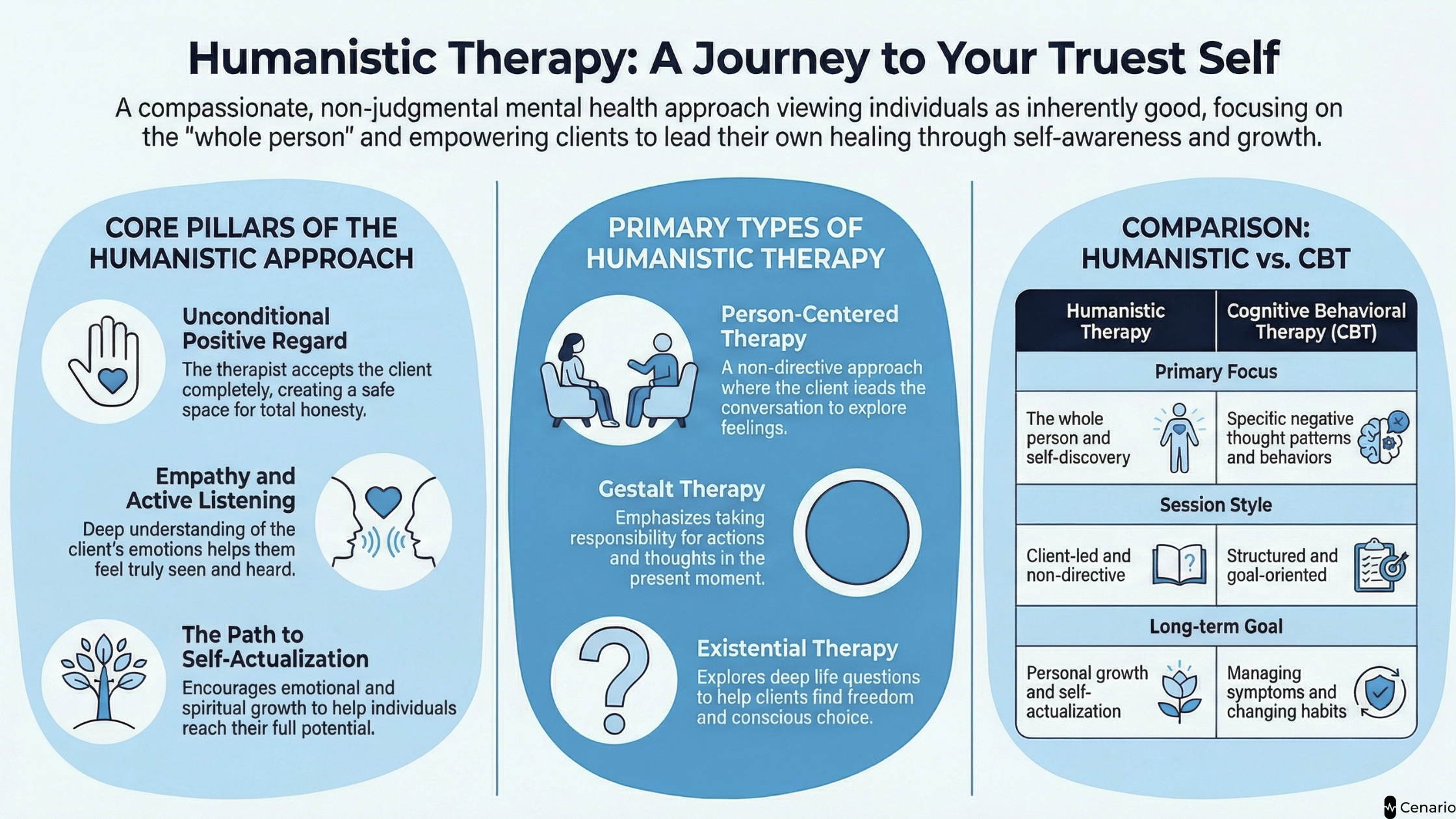
1. Unconditional Positive Regard
One of the most important elements of this therapy is unconditional positive regard. This means the therapist accepts and values the client completely, no matter what they say or do. This acceptance helps people feel safe enough to open up and be themselves.
2. Empathy and Active Listening
Therapists use active listening, which involves truly hearing and understanding what the client is saying, both with their words and emotions. This kind of deep empathy helps the client feel seen and understood.
3. Authenticity
The therapist is real, honest, and open, not acting as a distant authority figure. This encourages the client to also be honest and express their true self.
4. Self-Actualization
Humanistic therapy encourages clients to aim for self-actualization, which is the process of becoming the best version of themselves, growing emotionally, mentally, and spiritually.
Types of Humanistic Therapy
There are several forms of humanistic therapy, each with its own style and focus. Some of the most popular humanistic approaches include:
1. Person-Centered Therapy
Also known as client centered therapy, this method was developed by Carl Rogers. It focuses on the client’s own experience and encourages them to lead the conversation. The therapist provides empathy, support, and unconditional positive regard.
2. Gestalt Therapy
Gestalt therapy is another popular type of humanistic therapy. It encourages people to focus on the present moment and take responsibility for their thoughts and actions. Role playing and creative exercises are often used to help clients understand their feelings and behavior.
3. Existential Therapy
Existential therapy explores deeper questions about life, death, freedom, and purpose. It helps clients face their fears, find meaning, and make conscious choices about how they want to live.
These approaches including person-centered, gestalt, and existential therapy all aim to help people develop a stronger sense of identity and purpose.
How Does Humanistic Therapy Work?
In a typical humanistic therapy session, the client does most of the talking while the therapist listens carefully. The therapist may ask questions to help the client reflect or explore their feelings further, but they do not give advice or try to “fix” the person.
This therapy involves building a strong, respectful relationship between the client and therapist. The client is seen as the expert of their own life. Over time, this supportive environment helps the client become more confident, self-aware, and capable of making healthy choices.
Therapists may use tools like journaling, art, mindfulness, or role playing to help clients express themselves and grow.
Benefits of Humanistic Therapy
Humanistic therapy has many benefits, especially for people who feel lost, stuck, or misunderstood. Some of its main advantages include:
- Improved self-esteem and confidence
- Greater emotional awareness
- Better communication and relationships
- Stronger sense of meaning and direction
- Support for issues like anxiety, depression, grief, or trauma
- Encouragement of long-term personal growth
Humanistic Therapy vs. Other Approaches
While humanistic counseling focuses on self-discovery and emotional connection, other types of therapy may take a more structured approach. For example, cognitive behavioral therapy (CBT) focuses on changing negative thought patterns and behaviors. CBT is very effective for treating specific conditions like anxiety and depression.
However, some therapists combine CBT with humanistic approaches for a more balanced experience. For example, therapy including both empathy (from humanistic therapy) and skill-building (from CBT) can help clients understand their feelings while also learning how to manage them better.
Is Humanistic Therapy Right for You?
You might benefit from humanistic therapy if:
- You want to feel more understood and accepted
- You are interested in exploring your identity, values, or purpose
- You feel stuck or unmotivated in life
- You want a therapist who listens without judgment
- You’re seeking long-term personal growth, not just symptom relief
This approach is especially effective for people who want to work on themselves in a deep, meaningful way, not just get quick fixes.
Final Thoughts
Humanistic therapy is more than just a way to manage mental health challenges—it’s a journey toward becoming your truest self. By offering compassion, respect, and a space for self-exploration, this client centered therapy empowers individuals to take control of their own healing and growth.
Whether you’re dealing with stress, loss, identity issues, or just looking for greater meaning in life, humanistic counseling can help you reconnect with your values, find your purpose, and move forward with clarity and confidence.
anistic therapy offers a refreshing and deeply human space for transformation.
Take the First Step Toward Your Wellness Journey
Want to understand your emotional and physical needs better?
Take our Quick Quiz to get a personalized supplement recommendation designed to support your mental clarity, emotional balance, and overall well-being, tailored just for you.
Your healing starts with knowing yourself.
Frequently Asked Questions
1. What makes humanistic therapy different from other types of therapy like CBT?
Humanistic therapy focuses on the individual as a whole and emphasizes emotional expression, self-awareness, and personal meaning. It is non-directive, meaning the client leads the session. In contrast, cognitive behavioral therapy (CBT) is more structured and goal-oriented, focusing on changing negative thoughts and behaviors. Many therapists now use a blended approach including elements of both humanistic therapy and CBT to meet the unique needs of each client.
2. Who can benefit most from humanistic therapy?
Humanistic counseling is especially helpful for individuals seeking personal growth, emotional healing, and a deeper understanding of themselves. It’s ideal for those facing identity issues, relationship challenges, low self-esteem, grief, or existential questions. Teens, adults, and even couples can benefit from this client centered therapy, especially when they want a safe, non-judgmental space to express themselves.
3. What techniques are used in humanistic therapy sessions?
Therapists often use techniques like active listening, reflective questioning, and role playing to help clients explore their thoughts and emotions. Depending on the type of humanistic therapy, they may also include mindfulness practices, creative expression, or exercises from gestalt therapy and existential therapy. These methods support clients in staying present, gaining clarity, and moving toward self-actualization.