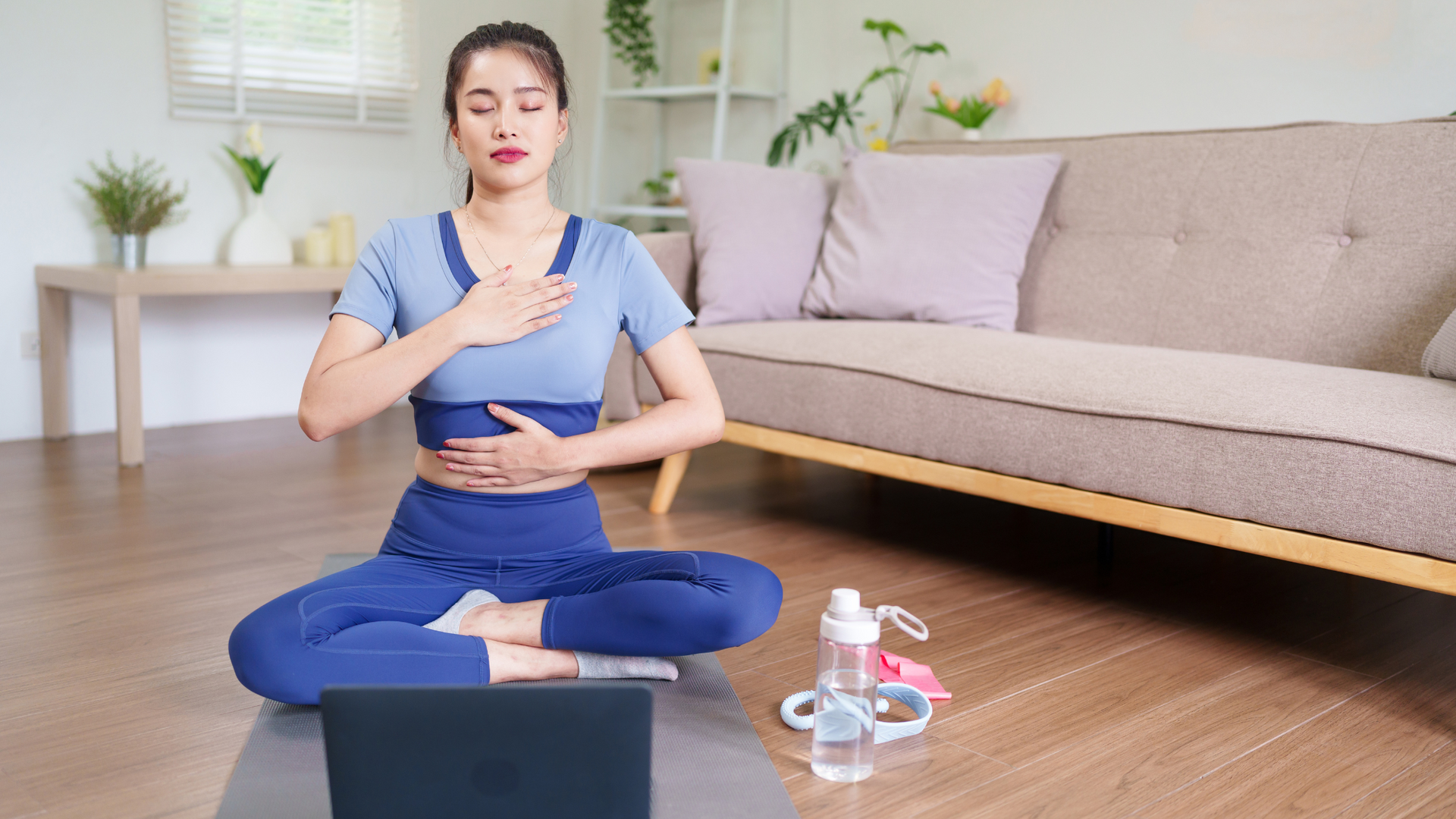

Diaphragmatic breathing, also known as belly breathing or deep breathing, is a technique that focuses on fully engaging the diaphragm, the large muscle located at the base of the lungs. Instead of shallow breathing in the chest, this method encourages deeper, slower breaths that expand the abdomen.
Although breathing is automatic, many people develop shallow breathing patterns due to stress, poor posture, or habits. Diaphragmatic breathing helps restore a more natural and efficient way of breathing, which can improve both physical and mental well-being.
If you want to explore more science-based techniques for stress and mental clarity, you can read more in our Knowledge Hub and take the quiz to get personalized supplement recommendations designed to support relaxation, focus, and emotional balance.
How Diaphragmatic Breathing Works
The diaphragm plays a central role in breathing. When you inhale deeply using this muscle, it contracts and moves downward, creating more space in the chest cavity. This allows the lungs to expand fully and take in more oxygen.
At the same time, the abdomen rises outward rather than the chest lifting upward. When you exhale, the diaphragm relaxes and moves back up, helping push air out of the lungs.
This pattern is more efficient than shallow chest breathing because it allows for better oxygen exchange and reduces unnecessary strain on the upper body.
It also activates the parasympathetic nervous system, which is responsible for rest, relaxation, and recovery.
Why Diaphragmatic Breathing Is Important
Many people unknowingly rely on shallow breathing, especially during stress. This type of breathing can keep the body in a more alert, tense state.
Diaphragmatic breathing helps shift the body into a calmer mode. It slows the heart rate, reduces muscle tension, and signals to the brain that you are safe.
This technique is widely used for managing stress, anxiety, and emotional overwhelm. It can also improve focus and mental clarity by increasing oxygen supply to the brain.
In addition, it supports physical health by improving lung function, posture, and even digestion, as the diaphragm gently massages internal organs during movement.
Diaphragmatic Breathing vs. Chest Breathing
The difference between diaphragmatic and chest breathing is subtle but important.
In chest breathing, the upper chest and shoulders rise during inhalation. This type of breathing is often fast and shallow, which can limit oxygen intake and increase feelings of tension.
In diaphragmatic breathing, the abdomen expands while the chest remains relatively still. The breath is slower, deeper, and more controlled.
Over time, switching to diaphragmatic breathing can reduce the strain placed on the body and improve overall breathing efficiency.
How to Practice Diaphragmatic Breathing
Learning diaphragmatic breathing starts with awareness.
You can begin by placing one hand on your chest and the other on your abdomen. As you inhale slowly through your nose, focus on expanding your belly rather than lifting your chest.
Your lower hand should rise, while the hand on your chest remains mostly still. Then exhale slowly through your mouth or nose, allowing your abdomen to fall.
At first, this may feel unnatural, especially if you are used to shallow breathing. With practice, it becomes more comfortable and automatic.
Practicing for a few minutes each day especially during calm moments can help build this habit.
Benefits of Diaphragmatic Breathing
The benefits of diaphragmatic breathing extend across both mental and physical health.
It helps reduce stress by calming the nervous system and lowering cortisol levels. Many people use it as a quick way to manage anxiety or regain control during overwhelming situations.
It can improve concentration and focus by promoting a steady flow of oxygen to the brain. It also supports better sleep by relaxing the body before bedtime.
Physically, it can enhance lung capacity, reduce tension in the shoulders and neck, and support better posture.
Over time, regular practice can lead to improved emotional regulation and a greater sense of calm.
When to Use Diaphragmatic Breathing
This technique can be used in many situations throughout the day.
It is especially helpful during moments of stress, such as before a presentation, during a difficult conversation, or when feeling overwhelmed.
It can also be part of a daily routine, such as in the morning to start the day calmly or at night to prepare for sleep.
Because it is simple and discreet, it can be practiced almost anywhere.
Common Mistakes to Avoid
While diaphragmatic breathing is simple, a few common mistakes can reduce its effectiveness.
One is forcing the breath too much. The goal is not to take the biggest breath possible, but to breathe slowly and comfortably.
Another mistake is lifting the chest instead of expanding the abdomen. Keeping the focus on belly movement is key.
Some people may also rush the process. Slower breathing is more effective for activating relaxation.
Final Thought
Diaphragmatic breathing is a simple yet powerful way to support both your mind and body. By changing how you breathe, you can influence how you feel, think, and respond to stress.
With regular practice, it becomes a natural tool for relaxation, focus, and emotional balance, something you can use anytime, anywhere.
If you want to take your mental wellness further, consider taking the quiz to get personalized supplement recommendations designed to support calmness, focus, and overall well-being.
Frequently Asked Questions
How do I know if I’m doing diaphragmatic breathing correctly?
A simple way to check is by placing one hand on your chest and the other on your abdomen. When you inhale, your abdomen should rise while your chest remains mostly still. If your chest is lifting more than your belly, you may still be using shallow chest breathing. With practice, the movement of your abdomen will become more natural and consistent.
How often should I practice diaphragmatic breathing?
You can practice diaphragmatic breathing daily, even for just 5 to 10 minutes at a time. It is especially helpful to practice during calm moments so your body becomes familiar with the technique. Over time, it will be easier to use during stressful situations when you need it most.
Can diaphragmatic breathing help with anxiety or stress?
Yes, diaphragmatic breathing is widely used to support stress and anxiety management. By slowing your breath and activating the body’s relaxation response, it can reduce physical tension and help calm racing thoughts. While it is not a replacement for professional care, it is a simple and effective tool that can be used anytime to support emotional regulation.