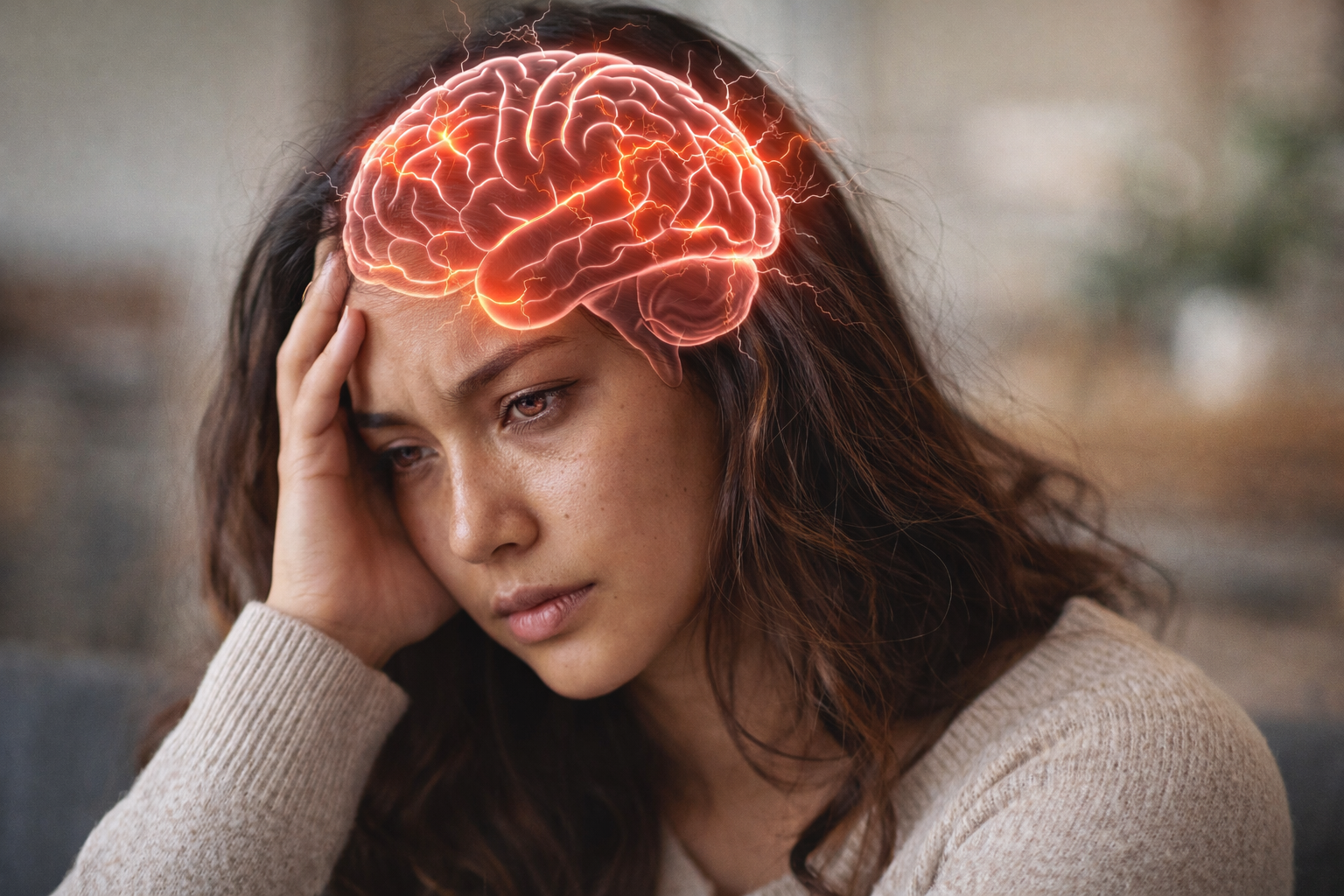

Definition And Overview
At its simplest, neuroinflammation describes immune-like activity within the brain and spinal cord. Resident cells such as microglia and astrocytes shift from maintenance roles to defensive states, releasing cytokines like IL-1β, IL-6, TNF, and interferon gamma, plus chemokines and reactive oxygen species. These mediators coordinate containment and repair but can also injure neurons and synapses if activation persists.
Core Features Of Neuroinflammation
Key elements to recognize include:
- Glial activation: Microglia act as first responders; astrocytes alter support and signaling functions.
- Cytokine signaling: Proinflammatory cytokines and chemokines orchestrate immune responses and recruit cells.
- Oxidative stress: ROS and nitric oxide help control pathogens but damage lipids, proteins, and DNA when unchecked.
- Barrier disruption: Inflammation can impair the blood-brain barrier, permitting peripheral immune cells to enter the CNS.
Acute Versus Chronic Neuroinflammation
Inflammation in the nervous system is not a single state. Acute activation is typically adaptive and time-limited, while chronic activation is maladaptive and linked to progressive pathology. The table below summarizes the main contrasts.
| Feature | Acute Neuroinflammation | Chronic Neuroinflammation |
|---|---|---|
| Duration | Short-term | Persistent or long-term |
| Purpose | Protective and reparative | Detrimental, promotes tissue damage |
| Main triggers | Infection, trauma, toxins | Protein aggregates, autoimmunity, aging |
| Outcome | Recovery or controlled repair | Neurodegeneration and functional loss |
Why Neuroinflammation Matters
This process plays a central role in many major brain disorders. Chronic neuroinflammation is implicated in Alzheimer’s disease, Parkinson’s disease, and multiple sclerosis, and it contributes to secondary damage after stroke or traumatic brain injury. Low-level persistent inflammation is also increasingly considered in conditions such as chronic pain and post-viral syndromes.
Reader Hook
Understanding neuroinflammation reveals how the brain defends itself and how the same defenses can, over time, become drivers of decline. Recognizing the shift from helpful to harmful inflammation is the first step toward better prevention and targeted therapies.
How neuroinflammation develops in the brain
Neuroinflammation begins when the brain’s immune system detects a threat, such as infection, trauma, or abnormal protein buildup. The first line of defense comes from microglia, which are the brain’s resident immune cells. Microglia rapidly respond to danger signals by changing shape, migrating to the affected area, and producing inflammatory molecules. Astrocytes, another type of glial cell, also become activated and help regulate the inflammatory response by releasing their own set of signaling proteins and supporting the integrity of neural networks.
These glial cells communicate through a complex web of cytokines—small proteins like IL-1β, IL-6, TNF, and interferon gamma—that coordinate the immune response. Chemokines further attract additional immune cells to the site of injury or infection. In the early stages, this response is tightly controlled and aims to contain damage, clear debris, and support recovery.
Mediators and molecular players
Several key molecules drive neuroinflammation:
- Cytokines: These signaling proteins amplify the immune response and can either promote or resolve inflammation depending on the context.
- Chemokines: These attract peripheral immune cells, such as monocytes and lymphocytes, across the blood-brain barrier to assist in defense or repair.
- Reactive oxygen species (ROS) and nitric oxide (NO): Produced by activated glial cells, these molecules help destroy pathogens but can harm neurons and other brain cells if their levels remain high.
When neuroinflammation is acute and resolves quickly, these mediators help restore balance. If the response becomes chronic, however, their continued presence can disrupt normal brain function and contribute to disease progression.
The role of the blood-brain barrier
The blood-brain barrier (BBB) is a protective layer that normally keeps harmful substances and immune cells out of the brain. During neuroinflammation, the BBB can become more permeable. This increased permeability allows peripheral immune cells to enter the central nervous system, amplifying the inflammatory response. While this can be helpful in fighting infection, prolonged BBB disruption exposes the brain to further injury and may accelerate neurodegeneration.
Common causes and triggers
Neuroinflammation can be set off by a variety of factors. Acute triggers include infections (such as viral or bacterial meningitis), physical trauma (like concussion or traumatic brain injury), strokes, and exposure to neurotoxins. In these scenarios, the inflammatory response is usually short-lived and geared toward healing.
Chronic neuroinflammation, which is more damaging, often arises from persistent problems that the brain cannot easily resolve. Examples include the accumulation of abnormal proteins—such as amyloid-beta in Alzheimer’s disease or alpha-synuclein in Parkinson’s disease—autoimmune attacks on neural tissue as seen in multiple sclerosis, and the gradual changes associated with aging. Disruptions in the gut microbiome and ongoing metabolic stress are also being investigated as contributors to long-term inflammation in the brain.
Links to neurological diseases
Chronic neuroinflammation is now recognized as a core driver of several major brain disorders. In Alzheimer’s disease, for example, amyloid-beta plaques and tau tangles activate microglia and astrocytes, leading to a self-perpetuating cycle of inflammation and neuronal loss. In Parkinson’s disease, elevated levels of proinflammatory cytokines and distinct patterns of glial activation are consistently observed, contributing to the degeneration of dopamine-producing neurons.
Multiple sclerosis is characterized by an autoimmune attack against the myelin sheath that insulates nerve fibers. Here, chronic glial activation and infiltration of immune cells from the bloodstream result in ongoing tissue damage and neurological symptoms. Beyond these well-known conditions, neuroinflammation is also implicated in the aftermath of stroke and traumatic brain injury, where it can worsen secondary damage. Even in disorders like chronic pain and myalgic encephalomyelitis/chronic fatigue syndrome (ME/CFS), low-level neuroinflammation is believed to play a role in persistent symptoms.
Visualizing the neuroinflammation cascade
To better understand this process, imagine a cascade that starts with a trigger—such as infection or trauma—leading to glial cell activation and the release of cytokines and ROS. This chain reaction can compromise the blood-brain barrier, allowing more immune cells to enter and intensifying the response. If the process resolves, the brain returns to balance. If not, chronic neuroinflammation sets in, increasing the risk of neurodegenerative disease and functional decline.
Emerging Research and Therapies
Recent advancements in understanding neuroinflammation have opened new avenues for therapeutic interventions. Researchers are exploring a variety of strategies aimed at modulating the inflammatory response to prevent or mitigate damage in the central nervous system. One promising area involves the use of anti-inflammatory drugs that specifically target cytokines, the signaling molecules that play a pivotal role in neuroinflammation. By dampening the activity of cytokines like IL-1β and TNF, these treatments aim to reduce harmful inflammation while preserving the protective aspects of the immune response.
Another innovative approach focuses on microglia, the primary immune cells in the brain. Scientists are investigating methods to modulate microglial activity, either through inhibitors that prevent excessive activation or through reprogramming techniques that encourage a return to a more supportive state. Stem cell therapy and nanoparticles are also being studied for their potential to deliver anti-inflammatory agents directly to affected areas, reducing inflammation and promoting repair.
Recent Trends and Future Directions
Recent trends in neuroinflammation research emphasize the importance of understanding the balance between protective and harmful inflammation. Single-cell transcriptomics, a cutting-edge technique, is being used to map changes in glial cells during disease progression, providing insights into how these cells contribute to neurodegeneration. This knowledge is crucial for developing therapies that can selectively target harmful inflammation without disrupting necessary immune functions.
Looking ahead, personalized medicine is poised to play a significant role in treating neuroinflammation-related conditions. By tailoring anti-inflammatory strategies to individual disease profiles, clinicians hope to improve outcomes and reduce side effects. Ongoing research is also exploring the connections between neuroinflammation and aging, psychiatric disorders, and long COVID, aiming to uncover new therapeutic targets and improve patient care.
Frequently Asked Questions
What is neuroinflammation?
Neuroinflammation is the activation of immune processes within the central nervous system, involving glial cells and inflammatory molecules. It can be both protective and harmful, depending on the context and duration of the response.
What causes neuroinflammation?
Neuroinflammation can be caused by infections, trauma, toxins, autoimmune responses, protein aggregates, and aging. Persistent triggers are often associated with chronic neuroinflammation.
How is neuroinflammation linked to diseases like Alzheimer’s or Parkinson’s?
Chronic neuroinflammation contributes to the progression of neurodegenerative diseases by damaging neurons and disrupting brain function. In conditions like Alzheimer’s and Parkinson’s, persistent inflammation exacerbates the loss of neural tissue.
What symptoms might neuroinflammation cause?
Symptoms of neuroinflammation can include cognitive decline, mood changes, fatigue, pain, and movement disorders, varying according to the underlying condition and the areas of the brain affected.
Can neuroinflammation be treated?
Current treatments focus on reducing inflammation through anti-inflammatory drugs and immune modulators. New therapies are being developed to target glial cells and specific inflammatory pathways, offering hope for more effective interventions.
Is neuroinflammation always harmful?
No, neuroinflammation is not always harmful. Acute neuroinflammation serves a protective role by responding to threats and promoting recovery. However, when it becomes chronic, it can lead to tissue damage and contribute to disease progression.
How is neuroinflammation detected?
Neuroinflammation is detected through biomarkers in cerebrospinal fluid, neuroimaging techniques, and the analysis of inflammatory molecules. These methods help in diagnosing and monitoring the extent of inflammation in the central nervous system.
Are there lifestyle factors that affect neuroinflammation?
Lifestyle factors such as diet, exercise, sleep, and gut health may influence neuroinflammatory processes. Research is ongoing to better understand these relationships and how they can be leveraged to manage or prevent neuroinflammation.