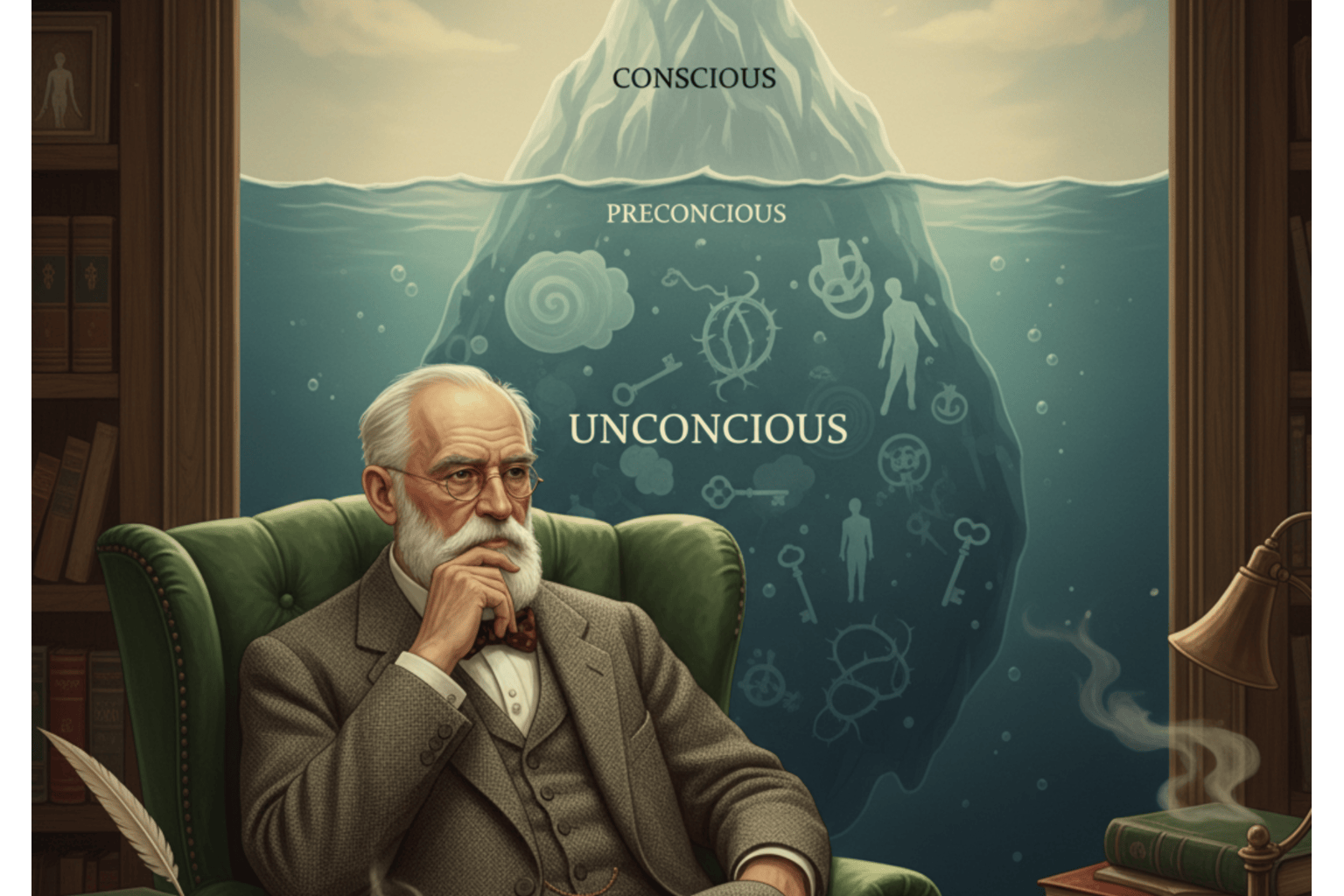

The unconscious mind is the part of human mental processing that functions without our direct awareness. While the conscious mind manages active thinking, reasoning, and decision-making, the unconscious operates in the background, storing and processing information that influences our behavior, emotions, and choices, often without us realizing it.
The concept was popularized by Sigmund Freud in the early 20th century. Freud described the unconscious as a reservoir of thoughts, memories, and desires that are too painful or socially unacceptable to acknowledge consciously. Although his theory was controversial, it shaped the foundation of modern psychology.
Today, researchers describe the unconscious mind not as a mysterious hidden force, but as a highly efficient processing system that enables habits, automatic reactions, and learned behaviors. It helps us function smoothly in daily life, even when we’re not actively thinking about every step we take.
Key Characteristics
-
Hidden Processes
The unconscious operates outside conscious awareness. You are not actively aware of it, but it constantly works in the background—similar to a computer’s operating system running behind the programs you see on screen. -
Automatic Control
Many bodily functions and routines are managed unconsciously. Breathing, digesting food, blinking, or even typing on a keyboard once you’ve mastered it are all actions guided largely by unconscious processes. -
Emotional Storage
The unconscious holds unresolved emotions, repressed fears, and forgotten memories. These stored experiences may resurface through dreams, slips of the tongue (sometimes called “Freudian slips”), or sudden emotional reactions in daily life. -
Influence on Behavior
Much of human behavior is guided by unconscious patterns. For instance, biases, preferences, or first impressions often come from mental shortcuts created unconsciously through past experiences and conditioning.
Role in Daily Life
1. Memory and Learning
The unconscious mind acts as a vast storage system. Once you master a skill, like riding a bike, driving a car, or speaking a second language, it becomes “second nature.” You no longer consciously think through every step; instead, the unconscious automatically guides the behavior.
This process is called procedural memory, a type of long-term memory. It explains why you can quickly recall how to ride a bike after years without practice, your unconscious mind has held on to the skill.
2. Emotional Reactions
The unconscious plays a key role in shaping emotional responses. Sometimes, you may feel fear, anxiety, or joy without fully understanding why. This happens because the unconscious draws from past experiences to trigger automatic reactions.
For example:
- If you were bitten by a dog as a child, you might feel uneasy around dogs as an adult, even if you consciously believe they are safe.
- Smelling a certain perfume might trigger a wave of nostalgia, linked to an unconscious memory of someone important in your past.
These reactions show how powerfully unconscious memory and emotion can guide behavior.
3. Habits and Routines
The unconscious mind frees up mental energy by handling everyday routines. Brushing your teeth, locking the door before leaving, or tying your shoelaces become automatic habits that require little conscious thought.
This efficiency allows your conscious mind to focus on more complex tasks, such as problem-solving, planning, or learning new skills. Without unconscious processing, even the simplest daily routines would feel exhausting.
However, this mechanism also means that bad habits, like smoking, biting nails, or procrastinating, can become deeply ingrained in the unconscious, making them harder to break.
4. Dreams and Creativity
Dreams are widely viewed as a window into the unconscious mind. Freud saw dreams as expressions of hidden desires and unresolved conflicts, while modern neuroscience suggests they are the brain’s way of processing and organizing emotions, memories, and experiences.
Creativity is also closely tied to the unconscious. Writers, musicians, and inventors often report that their best ideas appear suddenly, while walking, showering, or even dreaming. This “aha!” moment comes from unconscious mental processing working behind the scenes until the solution surfaces.
Modern Psychology
Contemporary psychology has moved away from Freud’s emphasis on repressed desires, focusing instead on how the unconscious works in practical, observable ways.
- Implicit Memory: This is the type of memory that affects behavior without conscious recall. For example, you may know how to type quickly without remembering each key or be influenced by an ad you barely noticed.
- Conditioning: Many behaviors are shaped unconsciously through conditioning. If a child associates dogs with fear after one bad experience, they may grow up avoiding dogs without knowing why.
- Cognitive Biases: The unconscious plays a role in mental shortcuts (biases) that shape decision-making. For instance, you might favor familiar brands over new ones without a rational reason, your unconscious preference is guiding you.
This perspective sees the unconscious less as a vault of hidden desires and more as a system that automates much of our thinking and behavior.
Cognitive Neuroscience
Advances in brain imaging have provided strong evidence that much of what we do is guided by unconscious processes in the brain. Cognitive neuroscience examines how these processes work at the biological level.
- Unconscious Decision-Making: Brain scan studies show that activity linked to choices can be detected seconds before a person becomes consciously aware of making the decision. This suggests that the brain often decides first, and conscious awareness follows.
- Automatic Processing: Many daily tasks, such as driving a familiar route, are handled unconsciously. The brain shifts into “autopilot,” freeing conscious thought for unexpected events, like a sudden stop in traffic.
- Emotion and the Brain: Neuroscience also highlights how the unconscious processes emotional information. For example, the amygdala (a brain structure linked to fear) can trigger a stress response before the conscious mind even recognizes a threat.
This scientific view shows that the unconscious mind is not mystical, it’s a powerful, measurable system built into the way the brain works.
.png)
Key Insights
1. The Unconscious Mind Is Not Negative by Default
A common misconception is that the unconscious mind is filled only with repressed, dark, or dangerous thoughts. While Freud often emphasized its hidden conflicts, modern psychology shows that the unconscious is not inherently negative. Instead, it’s essential for survival and daily functioning.
- It keeps your heart beating and your lungs breathing without conscious effort.
- It automates routines like walking, reading, or tying shoelaces, making life more efficient.
- It stores positive emotions and helpful patterns, not just fears or trauma.
In other words, the unconscious mind is more like a supportive assistant than a secret enemy.
2. Decision-Making, Creativity, and Problem-Solving Happen Unconsciously
The unconscious mind is often “ahead” of conscious thought. Research in neuroscience shows that brain activity linked to choices can appear seconds before a person becomes aware of making a decision. This means the unconscious often prepares the ground for conscious choice.
- Decision-Making: When choosing what to eat, buy, or wear, unconscious preferences and past experiences often shape your choice more than logic does.
- Creativity: Many artists, writers, and inventors report sudden bursts of inspiration. These “lightbulb moments” often come after the unconscious has been processing ideas in the background.
- Problem-Solving: Have you ever struggled with a problem, taken a break, and suddenly found the answer? That’s the unconscious mind working quietly until the solution emerges.
3. Awareness of the Unconscious Improves Self-Understanding
Although the unconscious operates outside awareness, you can bring parts of it into focus. By doing so, you can better understand why you react a certain way or why certain habits feel hard to break.
- Therapy: Talking with a professional can uncover unconscious patterns and help resolve unresolved conflicts.
- Mindfulness: Practices like meditation bring attention to automatic thoughts and emotions, giving you more control over them.
- Reflection and Journaling: Writing down daily thoughts and feelings can reveal unconscious themes and patterns over time.
By becoming more aware of unconscious influences, you gain the ability to reshape habits, manage emotions, and make more intentional decisions.
Final Thoughts
The unconscious mind is not a shadowy force lurking in the background—it’s the silent engine that powers nearly every aspect of human life. It shapes how we think, feel, and act, often before we’re even aware of it. From guiding habits and routines to fueling creativity and emotional depth, the unconscious is the reason we adapt, survive, and thrive.
By learning to work with your unconscious, through awareness, reflection, and intentional change, you unlock a deeper level of self-understanding and personal growth. It’s not about controlling the unconscious, but about recognizing its power and letting it support you in becoming your best self.
Ready to take charge of your mental clarity and well-being? Take our quick quiz today and get personalized supplement recommendations designed to strengthen your focus, lift your mood, and fuel a healthier, sharper mind.
Frequently Asked Questions
1. Is the unconscious mind the same as the subconscious?
Not exactly. The terms are often used interchangeably, but many psychologists prefer unconscious mind because it reflects processes completely outside awareness. The subconscious usually refers to mental material that is not currently in awareness but can be recalled more easily, like a memory you aren’t thinking of until reminded.
2. Can I control my unconscious mind?
You cannot directly “control” it, but you can influence it. Practices like mindfulness, journaling, therapy, and even repeating affirmations can shape unconscious patterns. Over time, these methods bring unconscious habits and emotions into conscious awareness, where you can adjust them.
3. How does the unconscious mind affect dreams?
Dreams are often viewed as the unconscious mind processing emotions, memories, and daily experiences. Freud believed dreams symbolized hidden desires, while modern science sees them as the brain’s way of sorting and organizing information. Either way, dreams provide a glimpse into unconscious activity.
4. Why is the unconscious mind important for everyday life?
Without the unconscious, life would be overwhelming. You’d have to consciously think about every blink, every breath, and every routine task. The unconscious handles these functions automatically, allowing you to focus on learning, problem-solving, and creativity. It also stores experiences and emotions that influence how you react to the world.