
Many people believe that antidepressant drugs can be purchased over the counter in the United States, but this is a misconception. In reality, all antidepressant medications, including SSRIs (Selective Serotonin Reuptake Inhibitors), SNRIs (Serotonin-Norepinephrine Reuptake Inhibitors), and tricyclics, require a prescription from a licensed healthcare provider. This requirement ensures that individuals receive appropriate medical supervision and monitoring, which is crucial due to the potential risks and side effects associated with these medications.
Understanding the Interest in OTC Antidepressants
Despite the prescription requirement, there is a growing interest in over-the-counter antidepressants. This interest is often driven by several factors. First, barriers to accessing mental health care, such as cost, availability of providers, and long waiting times, can make it challenging for people to obtain necessary treatment. Additionally, the stigma associated with mental health issues may lead individuals to seek more private and convenient solutions.
Moreover, the desire for quick and easy access to treatments has fueled the search for alternatives that do not require a prescription. This has led to the popularity of supplements and natural remedies marketed as alternatives to prescription antidepressants. These products are often perceived as more accessible and less stigmatizing, even though their effectiveness and safety are not always well-established.
Avoid trial-and-error supplementation
Take the Cenario quiz and start with safer, more targeted options.
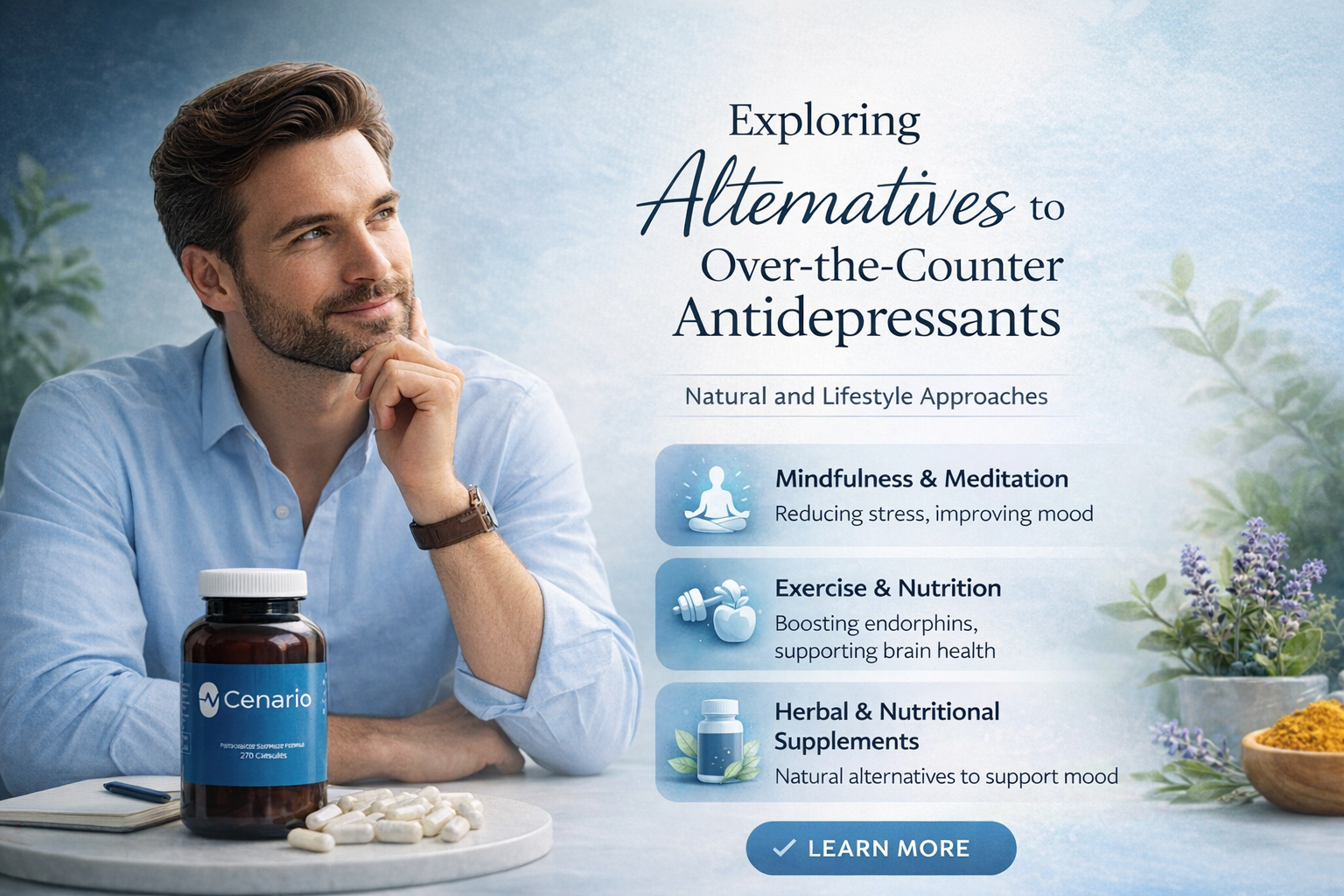
Exploring Alternatives to Prescription Antidepressants
While no true antidepressant drugs are available over the counter, there are several supplements and natural remedies that are marketed as potential alternatives. These include products such as St. John’s Wort, SAMe, omega-3 fatty acids, 5-HTP, and Rhodiola Rosea. These supplements are often promoted for their mood-enhancing properties, but it is essential to approach them with caution.
The evidence supporting the effectiveness of these alternatives is often limited or mixed. For instance, St. John’s Wort is one of the most popular supplements, and some studies suggest it may have mild antidepressant effects. However, it also poses a risk of drug interactions and inconsistent effectiveness. Similarly, other supplements like SAMe and omega-3 fatty acids have shown some promise in research, but the clinical evidence is not robust enough to recommend them as reliable treatments for depression.
It is crucial for individuals considering these alternatives to consult with a healthcare provider. Professional guidance can help ensure that any chosen supplement is safe and appropriate for their specific needs, especially given the potential for interactions with other medications or underlying health conditions.
Medical Authority and Regulations
In the United States, the stringent regulations surrounding antidepressant drugs underscore the importance of medical supervision. These medications, including SSRIs, SNRIs, and tricyclics, are not available over the counter due to their potential risks and the necessity for professional monitoring. The Food and Drug Administration (FDA) mandates that these drugs require a prescription, ensuring that patients receive the correct dosage and are monitored for side effects.
Antidepressants can have significant interactions with other medications and underlying health conditions, making professional oversight critical. This regulatory stance is rooted in safeguarding public health, as unsupervised use could lead to adverse effects, including worsening depression or triggering other mental health issues. Thus, the legal framework ensures that antidepressants are dispensed only under the guidance of a healthcare provider.
Policy and Advocacy for Prescription-to-OTC Switch
There is an ongoing debate in the medical community about the potential for certain antidepressants, particularly SSRIs, to be made available over the counter. Proponents argue that the long-term safety data of SSRIs could justify this shift, citing the need to improve access to mental health treatments, especially in areas with limited healthcare providers.
However, any move towards OTC availability would require careful consideration of regulatory changes, such as implementing age restrictions to ensure safety. For instance, limiting OTC SSRIs to adults over 25 could be a viable approach. Despite these discussions, significant hurdles remain, including concerns about self-medication, the potential for misuse, and the need for ongoing patient monitoring.
Supplement and Alternative Medicine Angle
In response to the demand for over-the-counter antidepressant options, a variety of supplements are marketed as natural alternatives. Among these, St. John’s Wort is one of the most well-known, often touted for its mood-enhancing effects. However, while some studies suggest it may be beneficial, concerns about drug interactions and inconsistent effectiveness persist.
Other supplements like SAMe, omega-3 fatty acids, 5-HTP, and Rhodiola Rosea are also popular. These are believed to support mental health, but research findings are often limited or mixed. For instance, while omega-3 fatty acids are essential for brain health, their impact on depression is not conclusively proven.
It’s crucial to approach these supplements with caution. Unlike prescription medications, supplements are not subject to the same rigorous testing and regulation, leading to variability in quality and potency. Consulting a healthcare provider before starting any supplement is essential, especially to avoid potential interactions with existing medications.
Systematic Reviews and Research Summaries
Systematic reviews and research summaries, such as those from Frontiers in Pharmacology and the Mayo Clinic, often conclude that while some OTC supplements may offer mild benefits, most lack strong evidence for effectiveness. These reviews emphasize the importance of evidence-based treatments and caution against relying solely on supplements for managing depression.
Healthcare professionals recommend consulting with a doctor before using any supplements, as they can help evaluate the potential benefits and risks based on individual health needs. This professional guidance is crucial for ensuring safe and effective treatment strategies for depression.
Research and Reviews on OTC Antidepressants
Systematic reviews and research summaries, such as those published in Frontiers in Pharmacology and the Mayo Clinic, often highlight that while some over-the-counter supplements may offer mild benefits for mood enhancement, they generally lack strong evidence for treating clinical depression effectively. These reviews stress the importance of relying on evidence-based treatments and caution against using supplements as a sole method for managing depression.
Healthcare professionals consistently recommend consulting with a doctor before using any supplements. This consultation can help evaluate the potential benefits and risks based on individual health needs, ensuring that any treatment strategy is safe and effective. Such professional guidance is crucial in navigating the complexities of mental health treatment.
The Role of Telehealth in Mental Health Care
As the demand for accessible mental health care grows, telehealth and online platforms have emerged as valuable resources for those seeking alternatives to traditional prescription antidepressants. These services offer the convenience of receiving professional consultations and prescriptions from the comfort of home, effectively reducing barriers related to cost and geographical distance.
Telehealth platforms provide a practical solution for individuals who may face challenges in accessing mental health care. However, it remains essential to prioritize physician guidance when considering these alternatives. Whether exploring supplements or telehealth options, professional advice ensures that treatment plans are tailored to individual needs and that safety is prioritized throughout the process.
Your mood is personal. Your supplements should be too.
Take the Cenario quiz to get a tailored starting point.
Frequently Asked Questions
Are there any true antidepressant drugs over the counter?
No, all true antidepressant drugs require a prescription in the United States. They are not available over the counter due to the need for medical supervision and monitoring.
What are some common OTC supplements marketed as antidepressants?
Supplements like St. John’s Wort, SAMe, and omega-3 fatty acids are often marketed as alternatives to prescription antidepressants. However, they lack strong clinical evidence for effectiveness in treating depression.
Why can’t antidepressants be sold over the counter?
Antidepressants cannot be sold over the counter due to safety concerns, potential side effects, and the necessity for professional monitoring to ensure appropriate use and management of any adverse effects.
Are there any ongoing discussions about changing the prescription status of antidepressants?
Yes, there is ongoing debate about making some SSRIs available over the counter. However, significant regulatory and safety concerns remain, posing challenges to this potential policy change.
What should I do if I want to explore alternatives to prescription antidepressants?
If you are considering alternatives to prescription antidepressants, it is important to consult with a healthcare provider. They can help you discuss safe and effective treatment options tailored to your specific needs and circumstances.