

What Is Fragmented Sleep?
Getting a good night’s sleep is essential for both physical health and mental clarity. But for millions of people around the world, sleeping through the night is far from easy. One common issue that often goes unnoticed is fragmented sleep, when your sleep is frequently interrupted by brief awakenings, even if you’re not fully aware of them.
These sleep disruptions may seem harmless at first, but over time, they can reduce the quality of your sleep, increase fatigue, and negatively affect everything from your mood to your immune system. If you’ve been waking up feeling tired despite spending enough hours in bed, fragmented sleep could be the reason why.
In this comprehensive guide, we’ll help you understand what fragmented sleep really is, what causes it, how it impacts your body and mind, and most importantly what you can do to fix it.
What Is Fragmented Sleep?
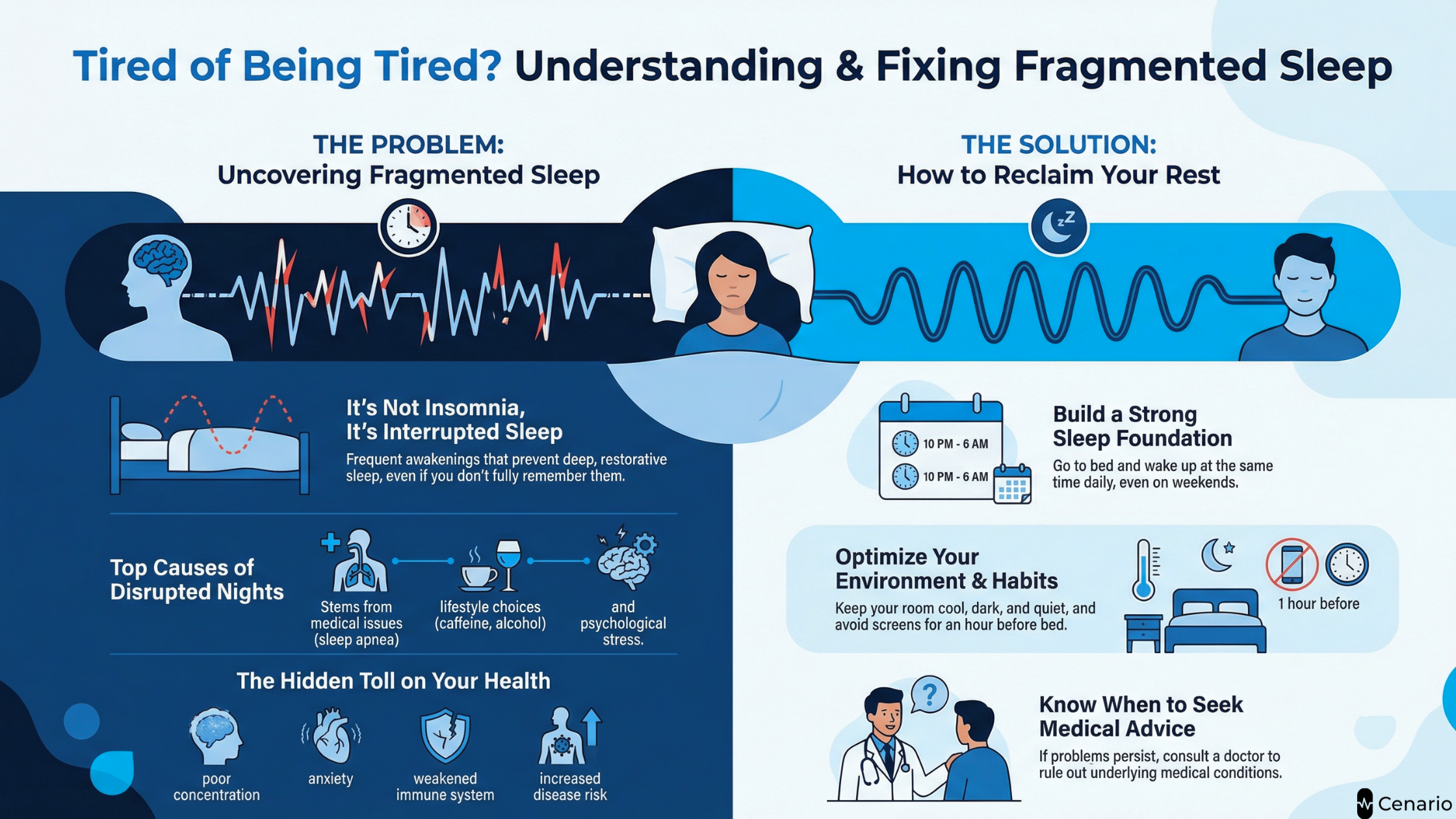
Fragmented sleep refers to repeated interruptions in your sleep cycle throughout the night. These awakenings may last just a few seconds or a few minutes, and you may not even fully remember them. However, they prevent you from reaching or maintaining the deeper, restorative stages of sleep like slow-wave sleep and REM sleep, which are critical for repair, memory processing, and emotional regulation.
Unlike insomnia, which is the inability to fall asleep or stay asleep for extended periods, fragmented sleep allows you to fall asleep easily but your rest is constantly broken by brief wake-ups. Even though your total sleep time might appear sufficient, the quality of sleep is often poor, leaving you feeling groggy, irritable, and unfocused during the day.
Why Fragmented Sleep Is a Serious Problem
We often talk about sleep in terms of hours, but not all sleep is created equal. Deep, continuous sleep is what allows your brain and body to recover from the stressors of the day. When this sleep is broken up, the effects can add up quickly.
Here are some of the negative impacts of sleep fragmentation:
Cognitive and Emotional Issues
- Difficulty concentrating or paying attention
- Memory lapses or forgetfulness
- Increased feelings of anxiety, irritability, or depression
- Slower reaction times and impaired decision-making
Physical Health Consequences
- Elevated risk of developing cardiovascular diseases
- Disrupted blood sugar regulation, contributing to type 2 diabetes
- Weakened immune system, making you more prone to infections
- Weight gain and metabolic dysfunction due to sleep deprivation
Social and Occupational Risks
- Decreased workplace productivity
- Higher risk of errors or accidents, especially in high-stakes professions like healthcare or transportation
- Tension in relationships due to mood swings or disrupted partner sleep
What Causes Fragmented Sleep?
There are a variety of factors both medical and lifestyle-related that can lead to sleep fragmentation. Understanding these root causes is the first step toward better sleep
1. Medical Conditions
Certain health issues and sleep disorders are closely linked to fragmented sleep.
Sleep Apnea
Sleep apnea causes you to stop breathing for short periods during the night, triggering brief awakenings so your body can restart breathing. These micro-awakenings often go unnoticed, but they severely reduce sleep quality.
Restless Legs Syndrome (RLS) and Periodic Limb Movement Disorder (PLMD)
These disorders cause unpleasant sensations in the legs or involuntary movements during sleep, which can interrupt sleep cycles and keep you from reaching deep sleep stages.
Chronic Pain
Conditions like arthritis, fibromyalgia, or back pain can make it uncomfortable to stay asleep. Pain often worsens when you’re lying still, and the discomfort leads to frequent awakenings.
Medications
Some medications, such as SSRIs (selective serotonin reuptake inhibitors) for depression or anxiety, can interfere with sleep continuity, causing frequent wake-ups or even vivid dreams that disrupt sleep.
2. Lifestyle and Environmental Factors
Your daily habits and sleep setting can have a powerful impact on your ability to sleep through the night.
Poor Sleep Hygiene
- Irregular bed and waking times
- Eating or exercising too close to bedtime
- Using electronic devices in bed
- Falling asleep in front of screens (TV, phone, tablet)
Stimulants and Substances
- Caffeine, even consumed in the late afternoon, can make it harder to fall asleep and stay asleep
- Alcohol, while it may help you fall asleep initially, disrupts deep sleep and often leads to nighttime wake-ups
Sleep Environment
Noise, light, or an uncomfortable mattress or pillow can all reduce sleep quality. If your environment isn’t optimized for rest, your sleep is likely to be interrupted.
3. Psychological Stress and Anxiety
High stress levels or an overactive mind at night can prevent your body from relaxing into deep sleep. Worrying about tasks, deadlines, or life events can keep your brain on high alert, leading to disrupted sleep throughout the night.
4. Bidirectional Effects of Pain and Sleep
Many people don’t realize that chronic pain and fragmented sleep influence each other. Lack of sleep makes you more sensitive to pain, and pain makes it harder to sleep—creating a vicious cycle that can be difficult to break without intervention.
How to Fix Fragmented Sleep
Thankfully, there are several evidence-based strategies that can help you reclaim your rest. These solutions are grouped into lifestyle, natural remedies, and medical interventions.
1. Build Better Sleep Hygiene
Good sleep hygiene is the foundation of better sleep. Start by:
- Going to bed and waking up at the same time every day—even on weekends
- Avoiding screens and blue light for at least 1 hour before bed
- Creating a relaxing bedtime routine: read a book, take a warm bath, or listen to calming music
- Making your bedroom sleep-friendly: quiet, dark, and cool (ideally around 65°F or 18°C)
2. Use Natural Remedies and Lifestyle Adjustments
- Exercise regularly (but not right before bed) to relieve stress and promote tiredness
- Limit or avoid caffeine and alcohol, especially in the late afternoon and evening
- Practice mindfulness, meditation, or breathing exercises to help calm your mind
- Consider natural sleep aids like magnesium, valerian root, or melatonin, after consulting your healthcare provider
3. Seek Medical Advice If Necessary
If your sleep disturbances persist, consult a sleep specialist or healthcare provider. They can:
- Perform a sleep study to check for conditions like sleep apnea
- Recommend a treatment plan for restless legs syndrome or chronic pain
- Adjust any medications that may be contributing to your interrupted sleep
4. Explore Sleep-Supporting Technology
- Sleep tracking apps or smartwatches can provide insight into your sleep patterns
- White noise machines block out distracting sounds
- Weighted blankets have been shown to reduce anxiety and promote deeper, calmer sleep
Final Thoughts
Fragmented sleep may seem like a minor annoyance, but over time, it can have serious impacts on your health, mood, and daily functioning. The good news is, it’s often treatable, especially when the root cause is identified.
Start by improving your sleep hygiene and daily habits. Pay attention to how your body feels during and after sleep. If you’re dealing with chronic stress, pain, or a medical condition, don’t hesitate to seek professional support. You deserve restorative, uninterrupted sleep that leaves you feeling refreshed and recharged.
Looking for personalized support?
Take our Cenario Quiz to receive custom supplement recommendations designed to address your unique sleep challenges, lifestyle, and health needs.
Click here to take the quiz nowa nd take the first step toward better sleep and better health.
Frequently Asked Questions
What are the main signs of fragmented sleep?
Signs of fragmented sleep include waking up frequently during the night and feeling unrefreshed in the morning, even after spending enough time in bed. You may also experience daytime fatigue, poor concentration, and irritability. These symptoms suggest that your body isn’t getting the deep, restorative sleep it needs.
How is fragmented sleep different from insomnia?
Fragmented sleep involves multiple awakenings throughout the night, often without difficulty falling asleep. Insomnia, however, is defined by trouble falling asleep or staying asleep for long periods. While both affect sleep quality, they stem from different causes and may require different solutions.
What causes fragmented sleep, and can it be prevented?
Fragmented sleep can be caused by medical conditions like sleep apnea or restless legs syndrome, as well as poor sleep habits, stress, or an uncomfortable environment. It can often be improved by maintaining a regular sleep schedule, reducing caffeine or alcohol intake, and creating a peaceful bedtime routine. Prevention usually starts with identifying and addressing the root cause.
How does fragmented sleep affect long-term health?
Over time, fragmented sleep can lead to serious health issues such as weakened immunity, heart disease, weight gain, and mood disorders. It also affects brain function, reducing focus, memory, and emotional stability. Even if you’re in bed for eight hours, poor sleep quality can have lasting effects on your physical and mental health.
What are the most effective ways to stop fragmented sleep?
Start by improving your sleep hygiene, go to bed at the same time each night, avoid screens before bed, and keep your room quiet and dark. Managing stress, limiting stimulants, and getting regular exercise can also help. For medical causes, consult a healthcare provider, and consider natural supplements if appropriate.
.