Understanding the Importance of Deep Sleep
Deep sleep also known as slow-wave sleep is one of the most important stages of sleep for physical restoration, cognitive function, and emotional stability. However, many people struggle to reach this deeply restorative stage of sleep, resulting in poor sleep quality, grogginess, mood changes, and difficulty concentrating throughout the day.
Understanding how deep sleep works and how your sleep schedule, circadian rhythm, and sleep habits influence it is the first step toward becoming a deep sleeper.
Why Deep Sleep Matters
Deep sleep plays a crucial role in overall health because it supports physical recovery through tissue repair, immune system strengthening, and muscle and bone rebuilding. It also enhances brain function by improving memory consolidation, learning ability, and executive functioning. On an emotional level, deep sleep helps maintain stability, increase stress tolerance, and reduce anxiety.
When you don’t get enough deep sleep, you may experience morning fatigue, irritability, weakened immunity, cognitive fog, slower thinking, and even difficulty falling asleep the following night. Without sufficient deep sleep, your body cannot fully recharge, making long nights of rest still feel unrefreshing.
What Makes Deep Sleep Different?
Deep sleep has distinct characteristics that separate it from light sleep and REM sleep:
1. Slow Brain Activity
Your brain produces slow delta waves, signaling the transition into full restoration mode.
2. Reduced Responsiveness
Your body becomes less sensitive to external stimuli like light noise, touch, or movement, something light sleepers struggle with.
3. Essential Biological Functions
This stage handles:
- regulating hormones
- muscle growth and repair
- immune system strengthening
- metabolic restoration
Because of its importance, becoming a “heavy sleeper” isn’t just about sleeping through noise, it means achieving deeper, healthier sleep cycles.
Common Barriers to Achieving Deep Sleep
Several internal and external factors can disrupt your ability to enter or stay in deep sleep:
1. Stress and High Cortisol
Chronic stress raises cortisol levels and interferes with your natural sleep-wake cycle.
2. Irregular Sleep Schedule
Inconsistent bedtimes disrupt your circadian rhythm, making it harder to reach deep sleep between sleep cycles.
3. Environmental Disturbances
Noise, temperature changes, and light exposure can prevent entry into deeper sleep stages.
4. Lifestyle Choices
Late caffeine, alcohol, heavy meals, and screen time delay melatonin production and disrupt sleep architecture.
Understanding these triggers allows you to make meaningful changes.
Sleep Cycles and Their Role in Deep Sleep
Every night, your body cycles through different sleep stages:
- Light sleep (Stage 1 and Stage 2)
- Deep sleep (Slow-wave sleep)
- REM sleep (rapid eye movement sleep)
Each sleep cycle lasts about 90 minutes, and deep sleep typically occurs in the first two cycles of the night. Think of the sleep cycle like a staircase: the deeper you go, the more restorative the sleep becomes.
This is why consistency and timing matter.
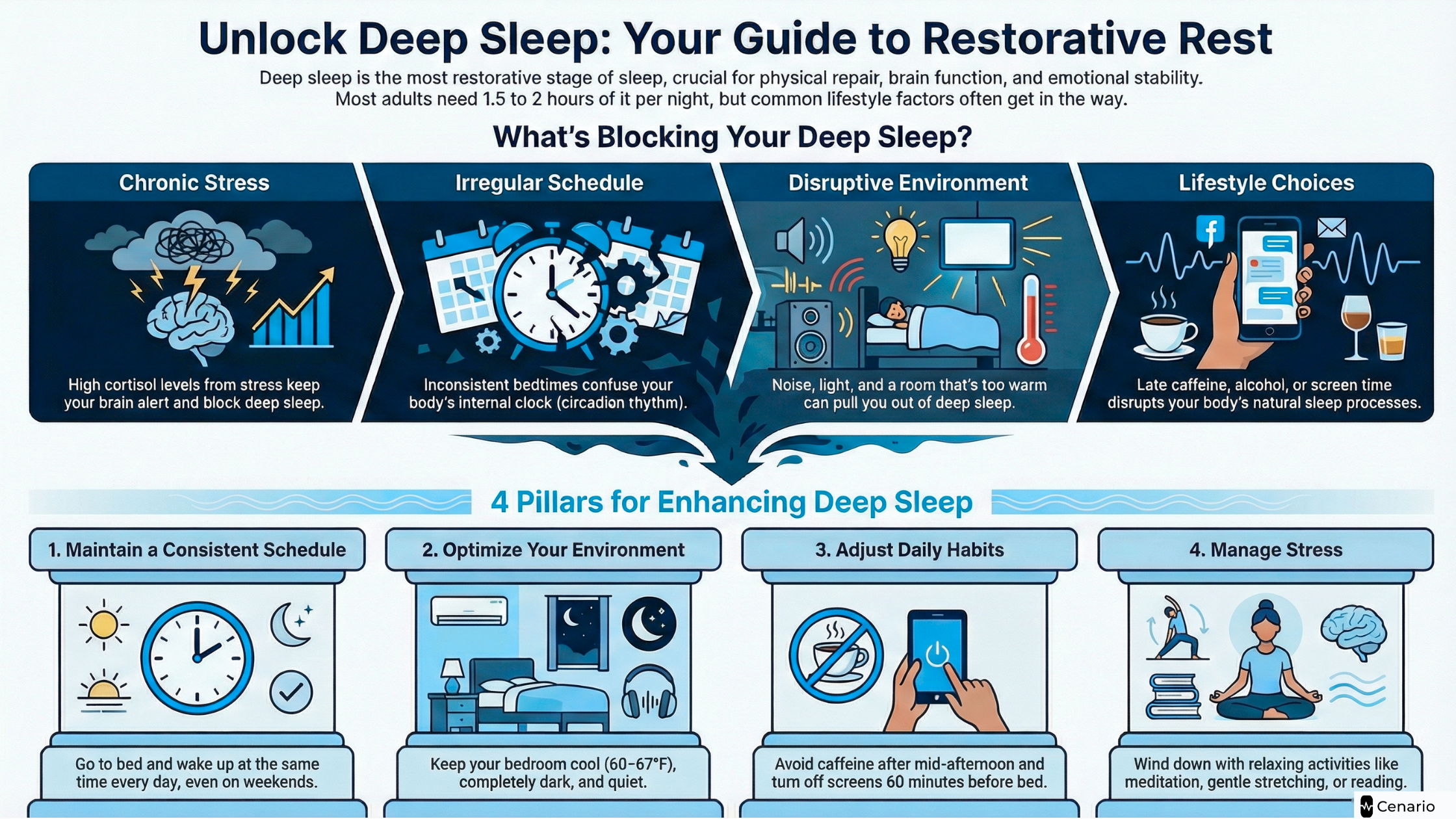
Key Strategies for Enhancing Deep Sleep
Becoming a deep sleeper is possible when you understand how to support your body’s natural sleep processes. Below are the most effective, science-backed strategies to help you improve your sleep quality, strengthen your sleep cycles, and ease your transition into slow-wave sleep.
1. Consistency Is Key
A stable sleep schedule is one of the most powerful ways to increase deep sleep. Your body follows a 24-hour internal clock called the circadian rhythm, which regulates when you feel alert and when you feel sleepy. When your sleep and wake times constantly change, your brain struggles to predict when to initiate deeper sleep stages—especially deep sleep.
How Consistency Helps Deep Sleep
- Reinforces melatonin production at the right time
- Makes it easier for your body to descend from light sleep into slow-wave sleep
- Prevents fragmented sleep cycles
- Enhances overall sleep quality over time
Tips to Improve Sleep Consistency
- Set the same bedtime and wake time every day, even on weekends.
- Create a dedicated wind-down routine 30–60 minutes before bed.
- Try activities that relax the nervous system, such as taking a warm bath or shower, reading, dimming the lights, or doing gentle stretching before bed.
- Avoid screens at least 60 minutes before bed. Blue light delays melatonin and makes falling asleep harder, especially for light sleepers.
Consistency teaches your brain to prepare for sleep earlier, helping you glide more easily into deeper restorative stages.
2. Optimize Your Sleep Environment
Your sleep environment has a direct impact on how quickly you enter deep sleep and whether you stay there. Even small disruptions like light noise, room temperature, or ambient light can pull you out of slow-wave sleep, especially if you are naturally a light sleeper.
Ideal Conditions for Deep Sleep
Room Temperature (60–67°F)
Your body temperature naturally drops when entering deep sleep.
A cooler room supports this thermal shift and helps maintain deeper stages of sleep.
Darkness
Light exposure, especially from streetlights, electronics, or early morning sun signals wakefulness to your brain.
Use:
- blackout curtains
- sleep masks
- warm, dim lighting in the evening
Quiet Environment
Noise triggers micro-awakenings that break continuous deep sleep.
Try:
- white noise machines
- fans
- earplugs
These mask disruptive sounds and support uninterrupted sleep cycles.
Comfort Matters
A supportive mattress and breathable bedding prevent overheating, discomfort, and restlessness—all of which keep your body stuck in lighter sleep stages.
Optimizing your environment can turn a fragmented night into a smooth transition through all sleep stages, especially deep sleep.
3. Improve Your Lifestyle Choices
What you eat, drink, and do during the day significantly affects your ability to reach restorative deep sleep at night.
Nutrition for Better Sleep Quality
Certain nutrients support relaxation, lower stress, and help regulate nighttime hormones.
Foods that Promote Deep Sleep
- Magnesium-rich foods: nuts, seeds, leafy greens
Magnesium calms the nervous system and relaxes muscles. - Tryptophan-rich foods: bananas, whole grains, dairy
Tryptophan helps the body produce serotonin and melatonin. - Complex carbohydrates: help increase tryptophan’s availability in the brain.
Foods and Drinks to Avoid
- Caffeine after mid-afternoon:Caffeine stays in the body for 6–8 hours and delays deep sleep.
- Nicotine: A stimulant that makes falling asleep difficult and shortens deep sleep duration.
- Alcohol before bed: It may help you fall asleep quickly, but it disrupts REM sleep and reduces deep sleep quality.
Nutrition shapes your entire sleep architecture, making the right choices essential.
Exercise for Deep Sleep
Physical activity helps regulate your circadian rhythm, reduce stress hormones, and promote deeper sleep.
Best Practices
- Aim for moderate exercise (walking, yoga, cycling) earlier in the day.
This stabilizes sleep cycles and promotes relaxation at night. - Avoid intense evening workouts.
Vigorous activity raises core body temperature and adrenaline levels, making it harder to enter slow-wave sleep.
Consistent movement supports healthier sleep cycles and strengthens your ability to fall into deep stages naturally.
4. Manage Stress and Anxiety
Stress is one of the biggest blockers of deep sleep because it keeps your brain in an alert, protective state, even when you’re physically exhausted. Elevated cortisol interferes with your circadian rhythm and prevents your brain from descending into slow-wave sleep.
Helpful Relaxation Techniques
Mindfulness Meditation
Calms the mind, reduces intrusive thoughts, and prepares the brain for sleep.
Deep Breathing
Slows your heart rate and activates the parasympathetic nervous system.
Progressive Muscle Relaxation
Releases physical tension that stops you from fully relaxing.
Journaling
Reduces nighttime overthinking and mental clutter.
Yoga or Gentle Stretching
Promotes relaxation of both body and mind.
If stress is chronic or overwhelming:
Consider CBT-I (Cognitive Behavioral Therapy for Insomnia)
CBT-I is the gold standard treatment for insomnia because it helps correct unhelpful sleep habits, reduce anxiety around sleep, challenge beliefs that interfere with falling asleep, and change behaviors that disrupt healthy sleep cycles. By managing stress effectively through techniques like CBT-I, you allow your mind and body to enter deeper sleep stages much more easily.
Tailored Advice for Specific Groups
Different lifestyles demand different approaches.
Shift Workers
Your internal clock becomes misaligned, making deep sleep difficult.
- Use blackout curtains to mimic nighttime.
- Keep a consistent sleep schedule, even on days off.
- Use white noise to block light noise from daytime sounds.
Parents
Interrupted sleep makes deep sleep rare.
- Share nighttime duties with a partner when possible.
- Keep your sleep environment cool, dark, and quiet.
- Take short, strategic naps (20 minutes) if nighttime sleep is inconsistent.
Seniors
Aging increases light sleep and reduces deep sleep.
- Stick to a strict sleep schedule.
- Add relaxing pre-bed habits like calming music.
- Treat underlying medical issues such as pain or sleep apnea.
Individuals With Anxiety
Anxiety keeps the brain in hyper-alert mode, blocking deep sleep.
- Meditation and relaxation exercises can break this cycle.
- CBT-I addresses the root cause of sleep-related anxiety.
Tracking Your Sleep
Monitoring sleep gives valuable insight into how well your sleep cycles function.
Tools to Consider:
- sleep apps
- smartwatches or fitness trackers
- Oura Ring, Fitbit, Garmin, etc.
These devices track:
- deep sleep duration
- REM sleep
- sleep disturbances
- heart rate
- body temperature
You can also create a DIY sleep diary noting:
- bedtime
- wake time
- caffeine intake
- stress levels
- exercise
- naps
Patterns help identify what improves and weakens your deep sleep.
When to Seek Professional Help
You should consider seeing a sleep specialist if you experience chronic insomnia, frequent awakenings, suspected sleep apnea, severe anxiety or depression that affects your sleep, or consistently low deep sleep despite making lifestyle changes. A sleep professional may recommend treatments such as polysomnography (an overnight sleep study), CBT-I, or medical interventions to address underlying issues. There is absolutely no shame in seeking help—sleep is a cornerstone of your overall health.
Final Thoughts: Becoming a Deep Sleeper Is Possible
Deep sleep is not random; it’s a skill strengthened by consistent habits, supportive environments, and healthy lifestyle choices. By improving your sleep schedule, managing stress, optimizing your sleep environment, and respecting your circadian rhythm, you can finally transform your nights.
Deep sleep is your body’s natural reset button. When you learn to support it, every part of your life improves, energy, mood, focus, strength, and emotional resilience.
Looking for additional support? Take the Cenario Quizto get a personalized supplement recommendation tailored to your unique sleep needs. Start your journey to deeper, restorative sleep today.
Frequently Asked Questions
What causes poor deep sleep?
Poor deep sleep can result from stress, irregular sleep schedules, high cortisol levels, poor sleep habits, and an unsupportive sleep environment. Factors like caffeine, alcohol, screen time before bed, and inconsistent circadian rhythms can also prevent the body from entering slow-wave sleep.
How many hours of deep sleep do adults need?
Most adults need 1.5 to 2 hours of deep sleep per night, usually occurring in the first half of the sleep cycle. While the exact amount varies, consistently getting less than this can affect memory, mood, and overall sleep quality.
How can I tell if I’m getting enough deep sleep?
Signs you’re getting enough deep sleep include waking up energized, staying alert throughout the day, and experiencing fewer mood fluctuations. You can also use sleep trackers that measure brain waves, heart rate, body temperature, and sleep cycles to estimate your deep sleep duration.
Do supplements help improve deep sleep?
Yes, some supplements may support deeper, restorative sleep by reducing stress, lowering nighttime cortisol, or promoting relaxation. Magnesium, L-Theanine, and adaptogens like Ashwagandha are widely used. For personalized guidance, Take the Cenario Quiz to receive supplement recommendations based on your unique sleep patterns and needs.